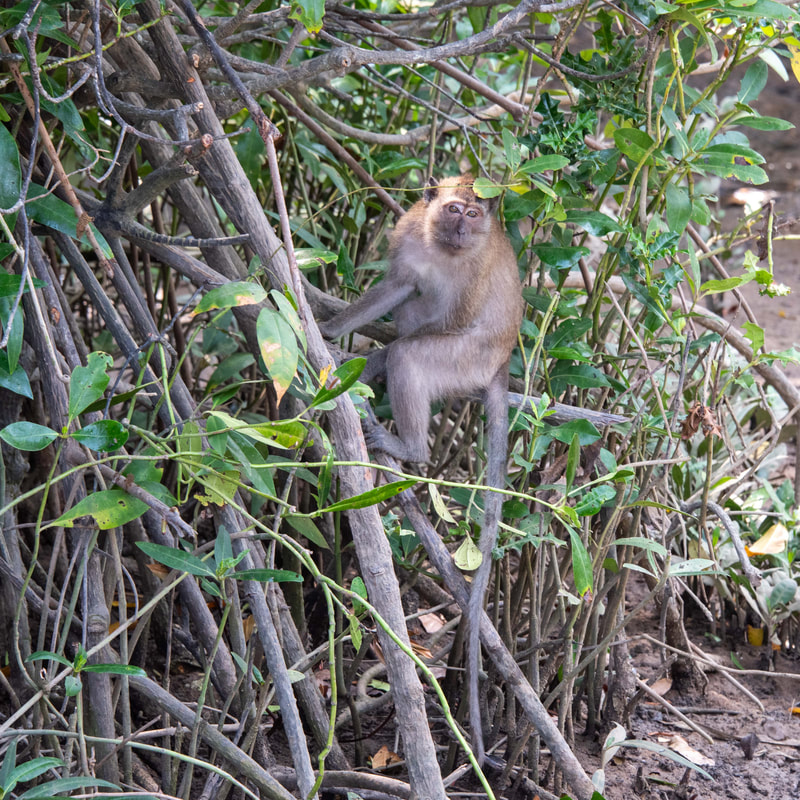
After a day of travel from Cambodia and through Bangkok, we arrived at an oasis, but first we had to get by this monkey. Our bungalow on stilts, along with clusters of others, was set in a body of water surrounded by jungle. This monkey was helping himself to mangos near our place when our driver pulled up to drop off our suitcases. To get to our bungalow we had to pass the monkey and he wasn’t having any of it – hissing and charging at us. Three times our driver ran us back to the cart. Finally, the monkey looked like he was ready to depart with a piece of fruit so Rick followed him to the end of an elevated path all the while the monkey taking furtive looks behind him to make sure Rick wasn’t after his mango. Once at the end of the raised walkway the monkey hopped down into the lagoon to wade across, with the mango held high above his head, until he was safely back in the trees. It was all very comical, but each morning we’d peek out the door to check that it was safe to leave. Alas, we only saw him the once. (Krabi & surrounding, Feb 28-Mar 5)
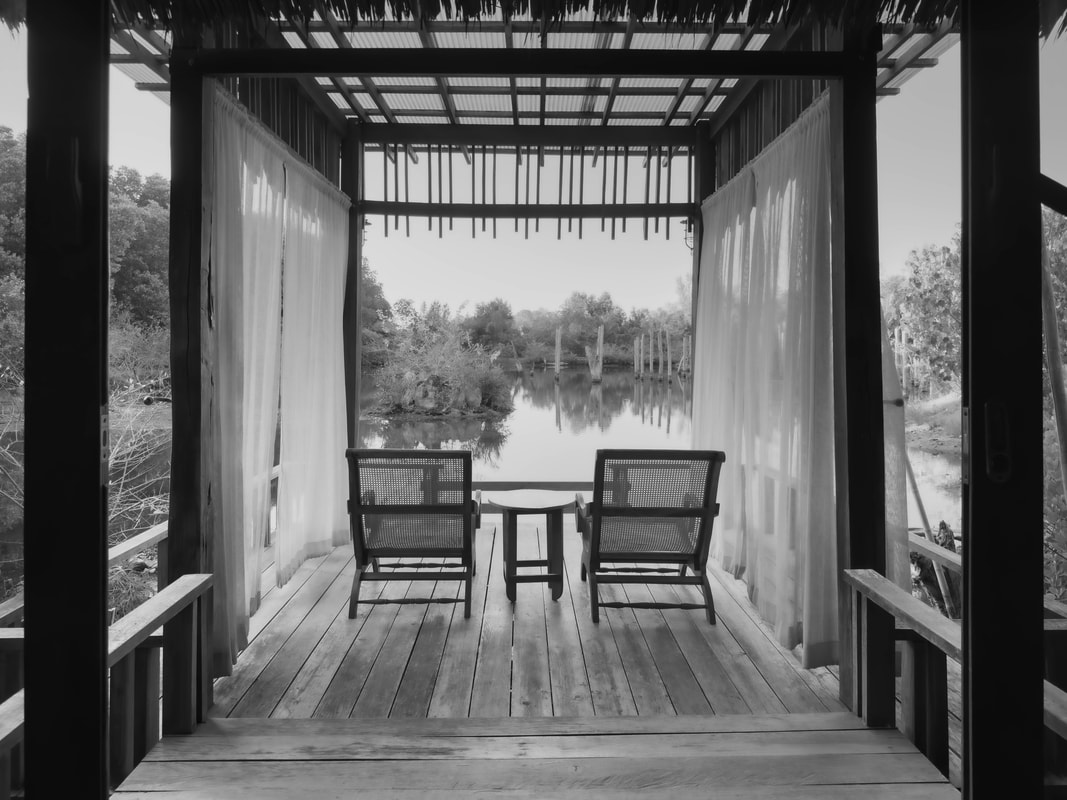
Each morning, sitting on the bungalow patio with pre-dawn coffees listening to the birds was sublime. Our original 4 days turned into 7, using it as our home base to check out the Krabi province beaches and water activities.
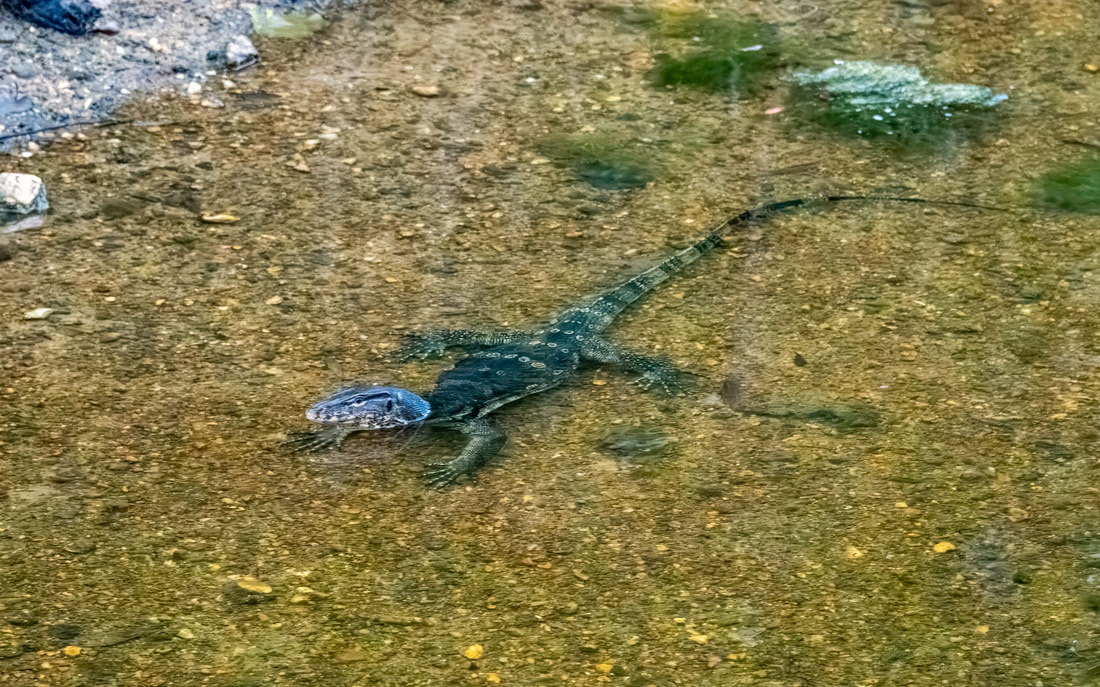
One morning while drinking coffee we saw this alligator looking animal lumber toward the water in front of our bungalow. It turned out to be about a 5’ long monitor lizard, a reptile we had hoped to see on this trip.
Each dawn and dusk were filled with the sounds of nature waking up or settling in for the night. On our way to dinner one night, we heard a roaring sound (this video doesn’t come close to the loudness). We looked around trying to find a boat or chainsaw until it became apparent it was this tiny Brown Cicada sending out his mating signal. He went on for more than 5 minutes, vibrating special membranes in his abdomen. At close range these insect's volume can be up to 120dB, similar to the volume of an aircraft taking off.
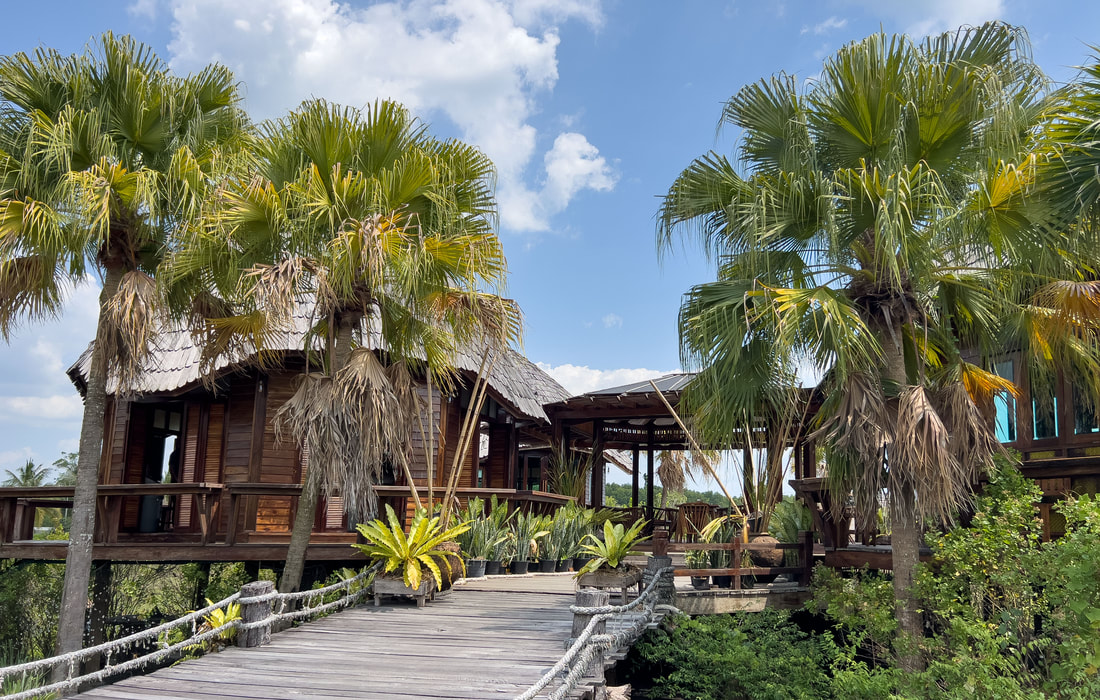
Sometimes the place we stay becomes part of the experience and the 7 days we spent here took on their familiar routines: Above, a long raised wooden path twisted overtop gardens, where food is grown for the restaurant, to terminate at the café for lunch.
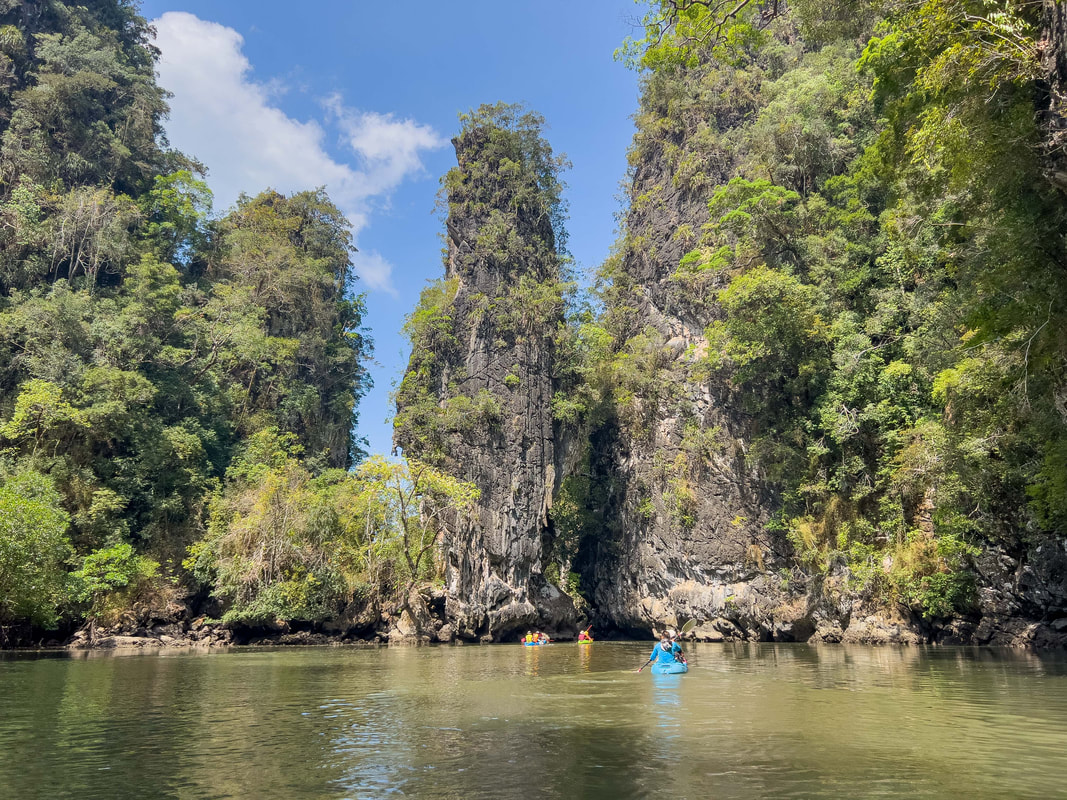
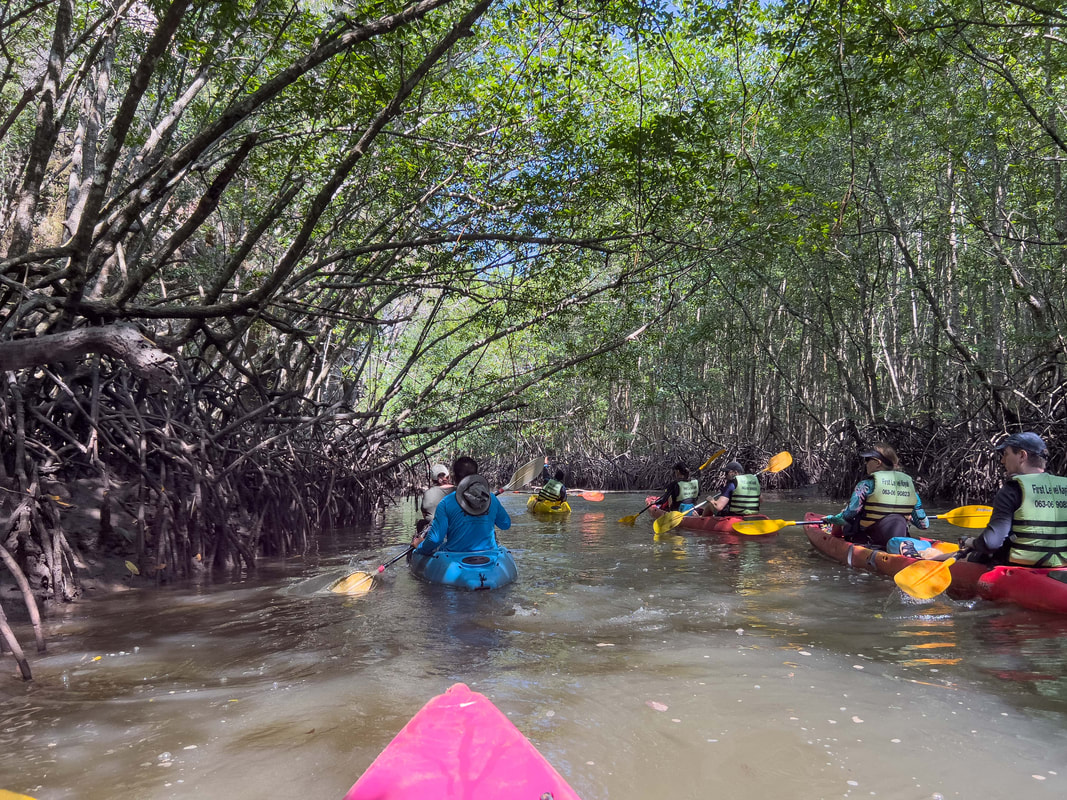
A kayak outing passed standalone towers of limestone (karts) and then into a channel fringed with mangroves.
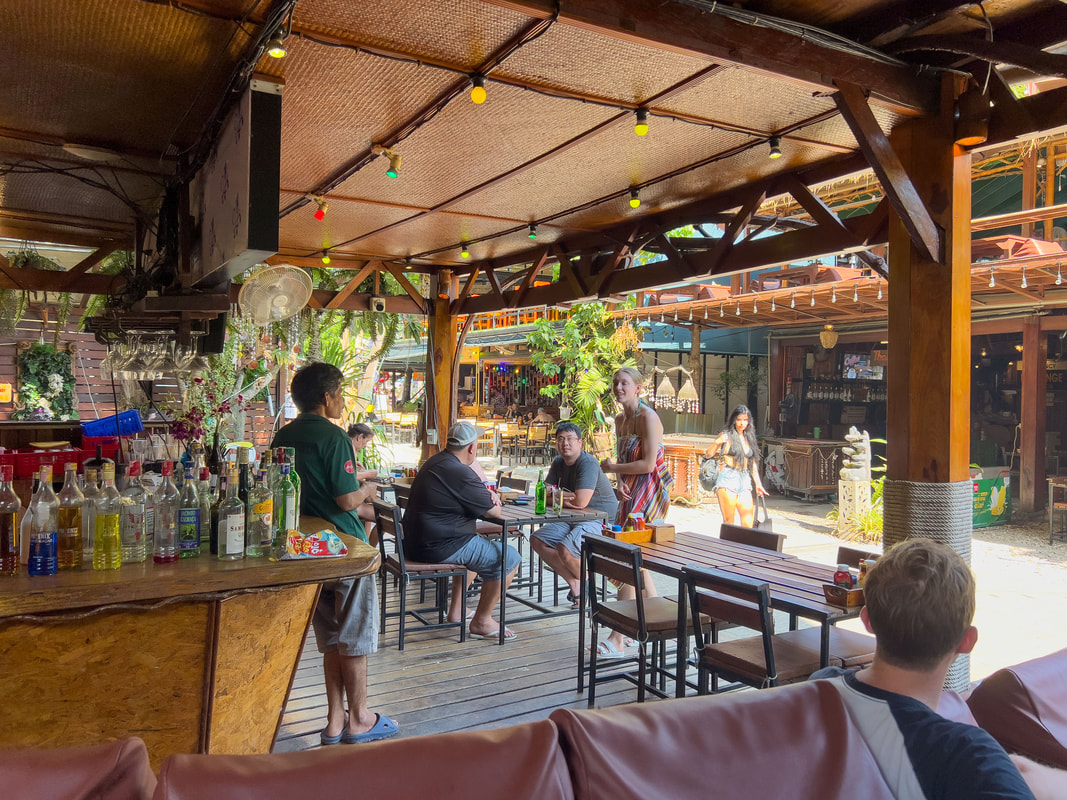
While the masses flock to famous Phuket for their beach time, fewer head to East and West Railay Beach, so we opted for a day trip there. Set on a finger of land there was an east beach on the one side connected by a 500m long path to the west beach. There was a Bohemian feel to the place with the narrow footpath taking you past a non-stop selection of casual places to shop, eat, drink, smoke weed, eat ‘happy mushrooms’ and just generally indulge. We didn’t realize that marijuana was legal in Thailand but since this beach day we’ve seen cannabis shops everywhere, but only once smelled it on the streets. Above: we hung out at this pub in comfy loungers with cold beers and people watched.
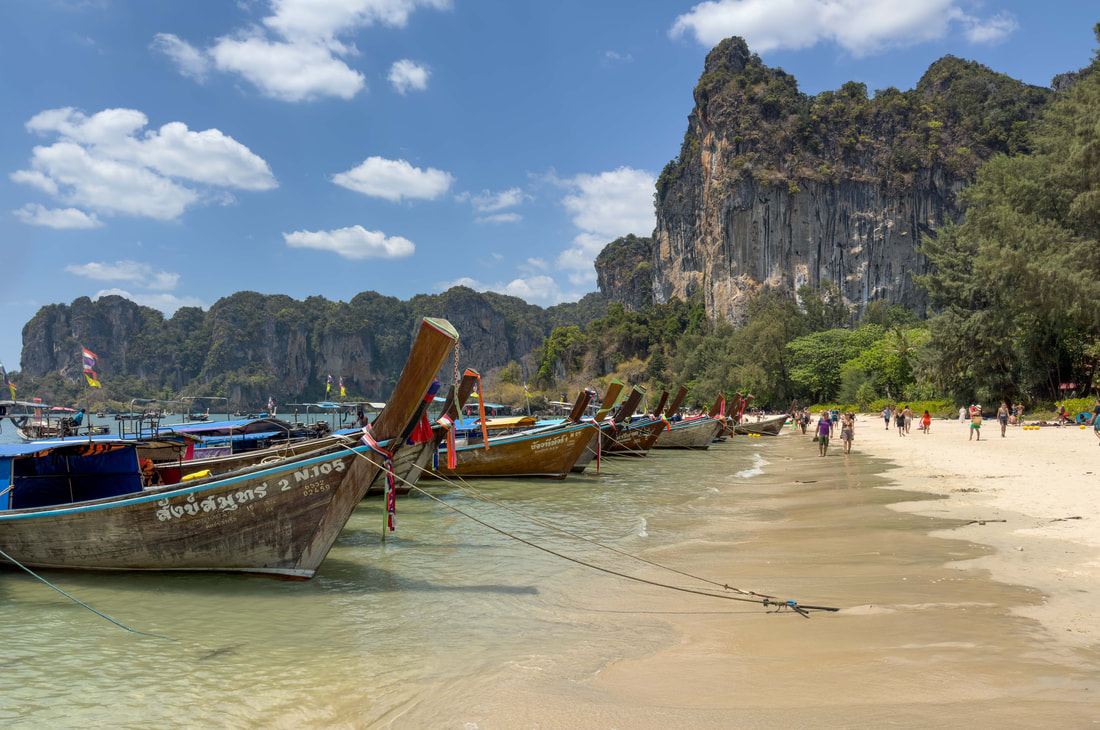
Railay Beach has beautiful turquoise water that makes it a favorite Andaman Sea destination on Thailand’s southern coast. With a multitude of small islands offshore, numerous long-tail boats are busy ferrying tourists between them for snorkeling and sightseeing adventures.
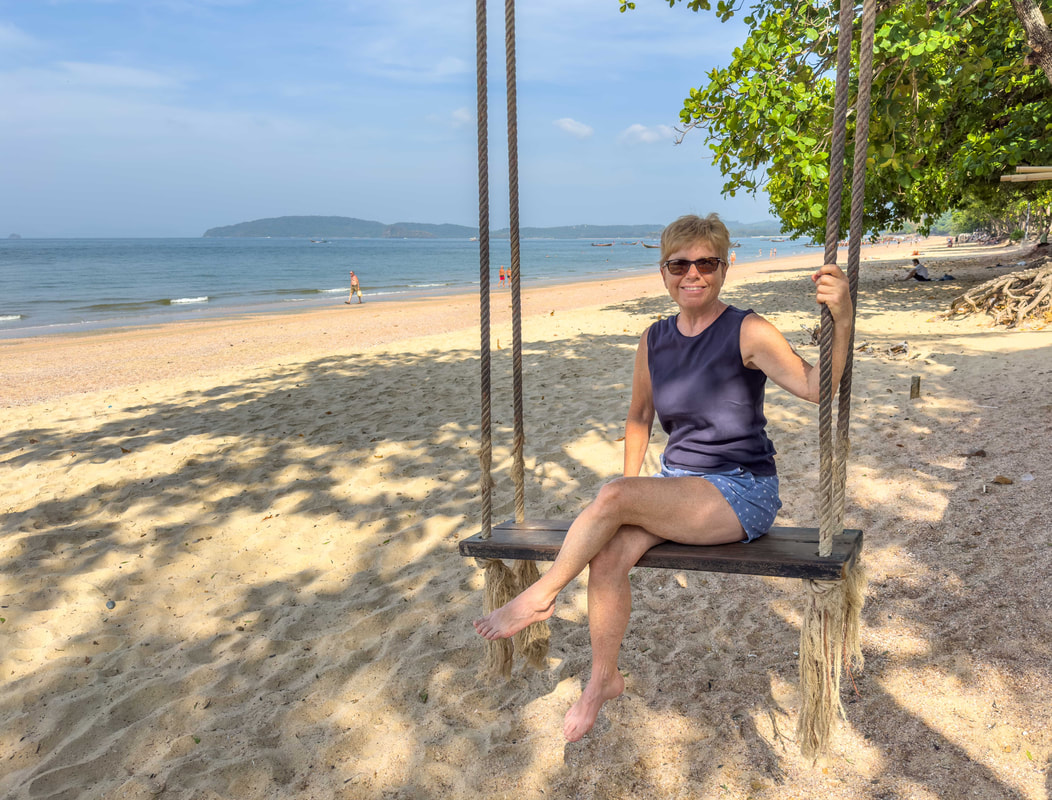
Ao Nang was only a 15 min tuk tuk ride from our bungalow. It didn’t have the character of the Railay Beaches, but there was a good beach walk and some very fun monkeys to watch.
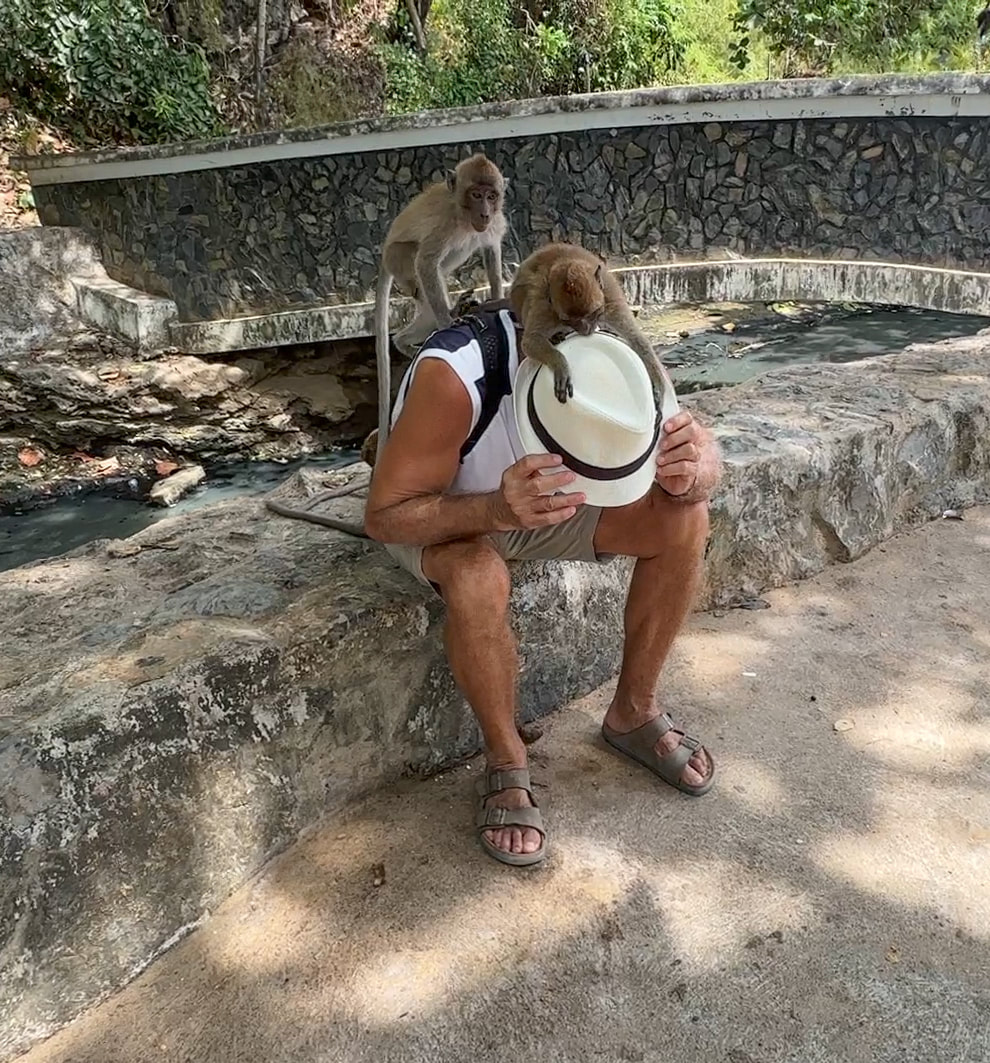
With the jungle about 40’ away, these monkeys didn’t have to come from very far to use a small shrine area as their personal daycare. There were so many babies and all they wanted to do was play. They didn’t seem interested in trying to get food from people, but they were curious. These 2 went from tumbling about near Rick to jumping and climbing on him. It all happened so fast and a guy nearby caught it on video which he later shared with us. To remove them, Rick just gently got up so they would bounce away.
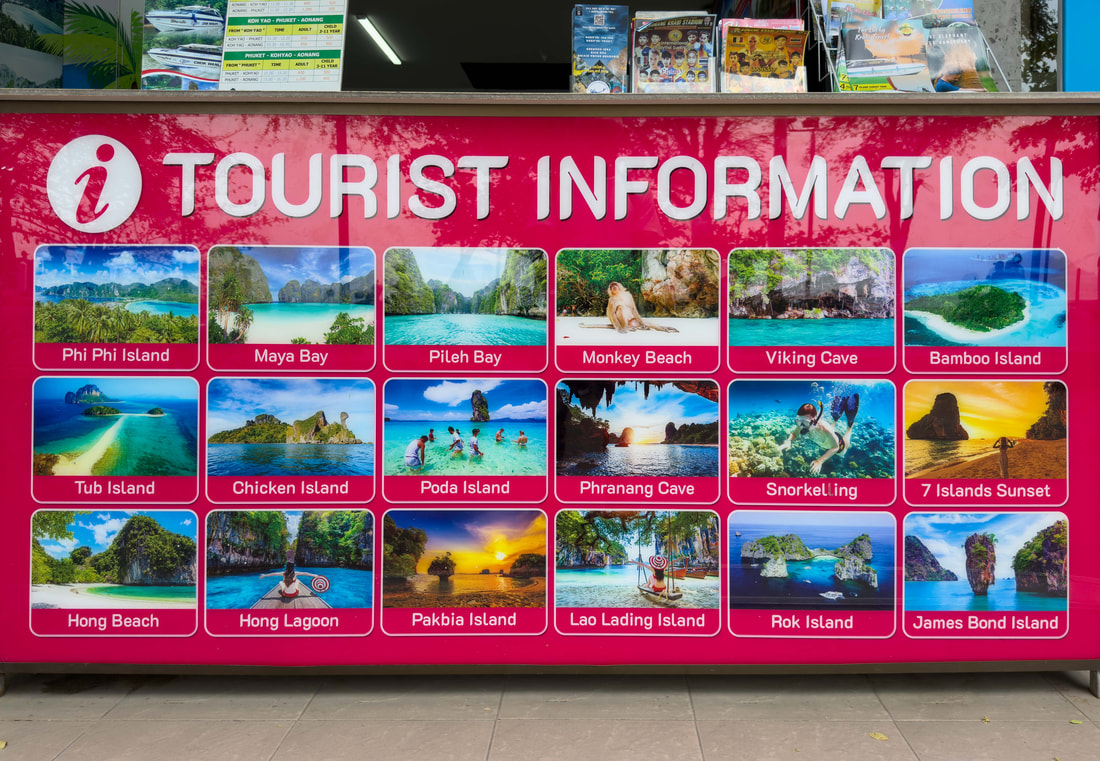
When planning the trip, we read that 40 million tourists visited Thailand the year before Covid and 28 million in 2023 - and for many it’s a beach holiday. Today we became part of that number, and it wasn’t pretty. Above is how the day tour was billed with promises of snorkeling in aquamarine waters.
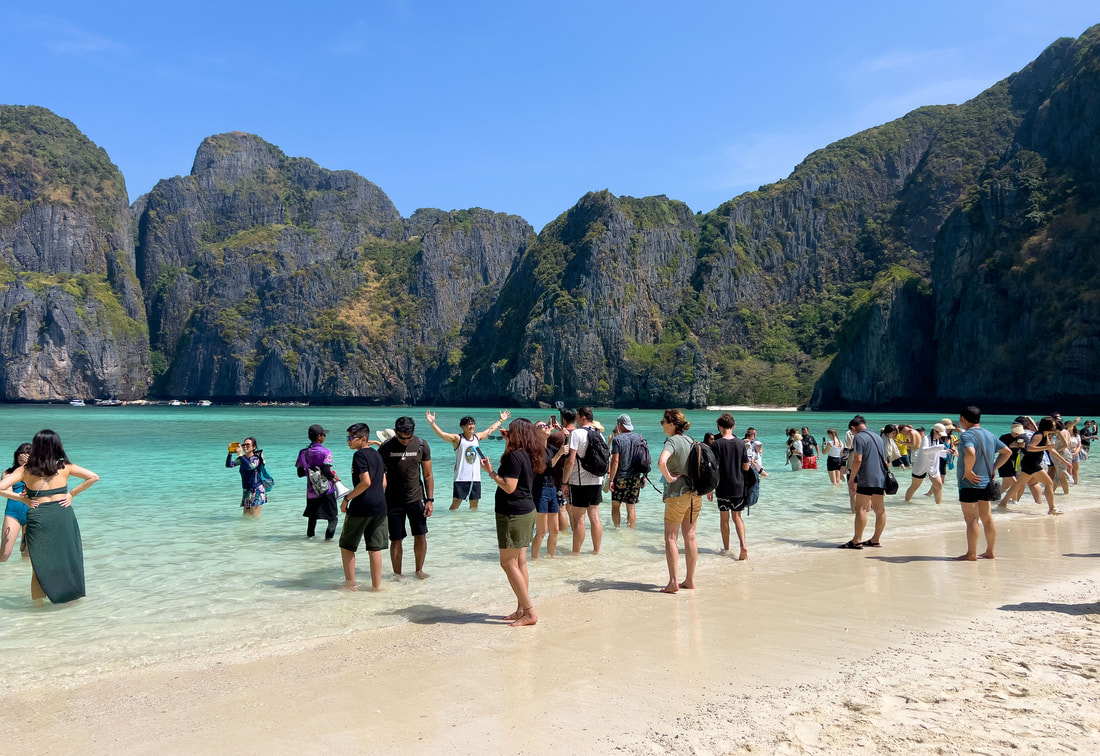
Our sole beach stop was sad. Because an attempt is being made to save the reef you were only allowed to go into the water up to your calves and a guy with a megaphone made sure you didn’t venture further. A continuous stream of tourists lined up to take their aquamarine backdropped selfie and then it was back to their boat to make room for the next batch. Further promised stops showed signs of overuse so that they ended up being opportunities for our boat to approach the shore for its passengers to take pics from the boat, pose on the boat, etc.
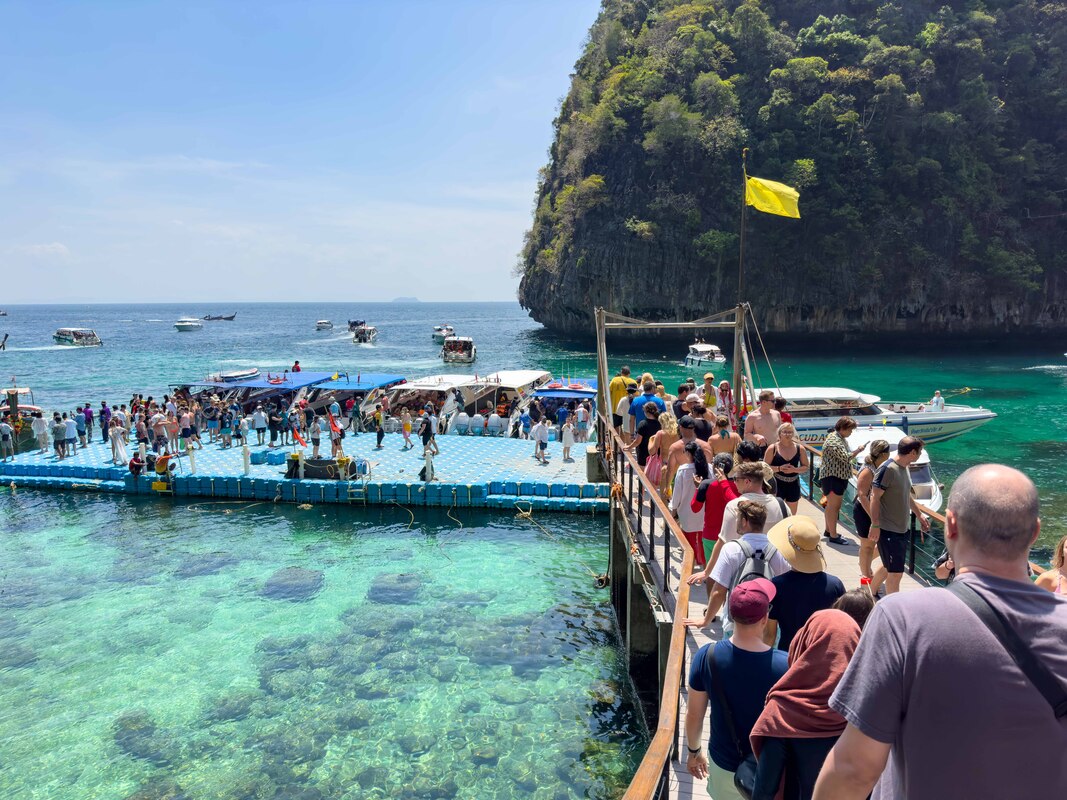
The sheer number of people and boats all vying for each location was comical (after we did an attitude adjustment LOL). We were told we were lucky as normally there can be a half hour wait for a boat to get a space at the pier. The snorkel ended up being one postage stamp sized area roped off while a ring of boats surrounded us revving their motors as each took turns for the best access for their passengers. A few lone fish managed to live in this circus. There is something to be said for a tourist lottery system or controls over access numbers, but these are just easy words when a country relies so heavily on tourism dollars.
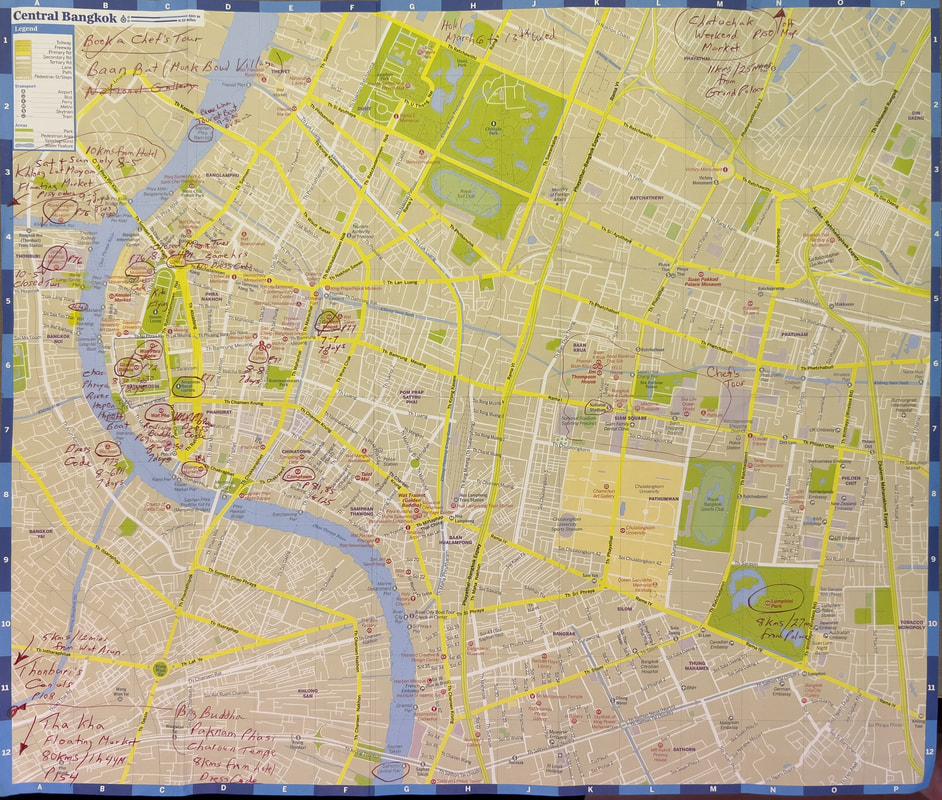
For two people who normally don’t like travelling in cities, we loved Bangkok! Our initial 4 day stay turned into 8 (& later 3 more) and each was packed with things to see and do. (Bangkok, Mar 6-12)
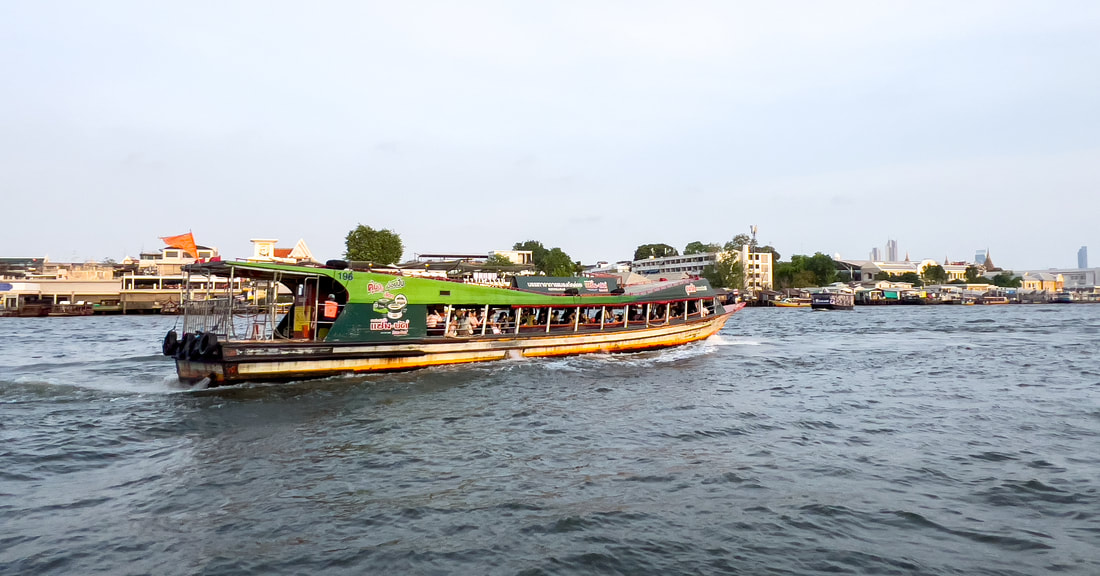
When something wasn’t on the itinerary we ferried up and down the river. Given that traipsing the city felt like we were walking in a sauna, being on the river brought a welcome breeze. The boats ran from the older style like above to double decker newer ones. It was a luck of the draw which you'd get.
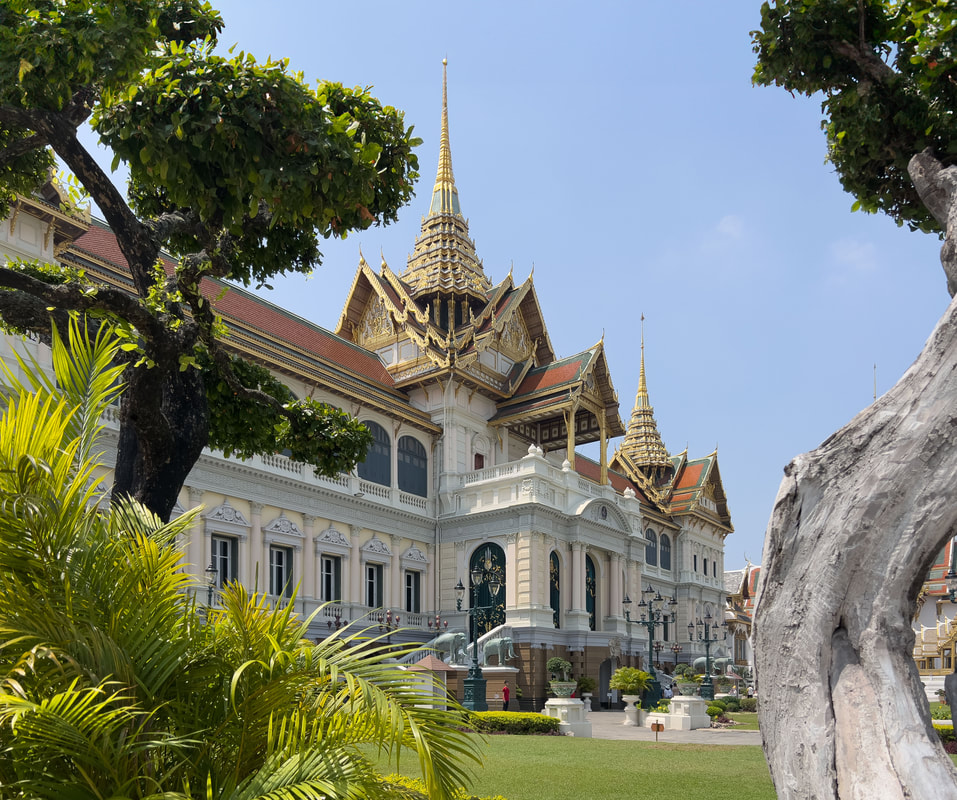
Generations of kings used the Grand Palace as their principal residence from 1782 until 1925 when King Rama IV moved to a villa not far away and opened the palace to the public (unless it’s used for official events).
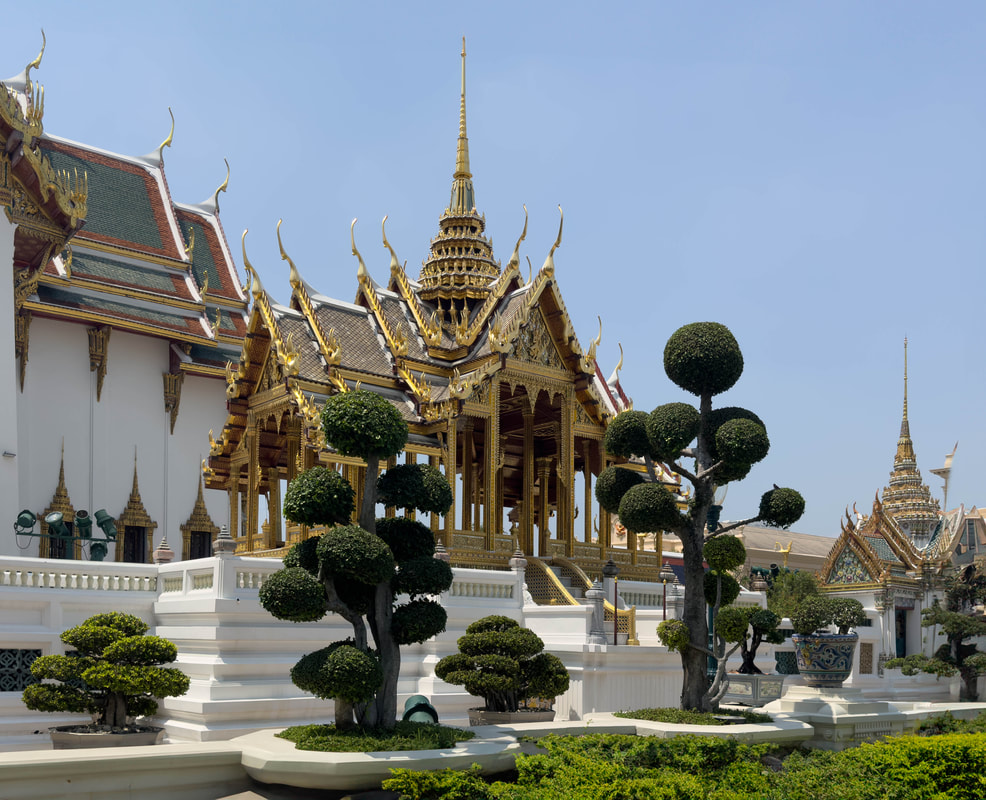
With each king leaving his legacy structure, the area was packed with architectural ornamentation, glinting gilding, glittering glass mosaics and semi-precious stones.
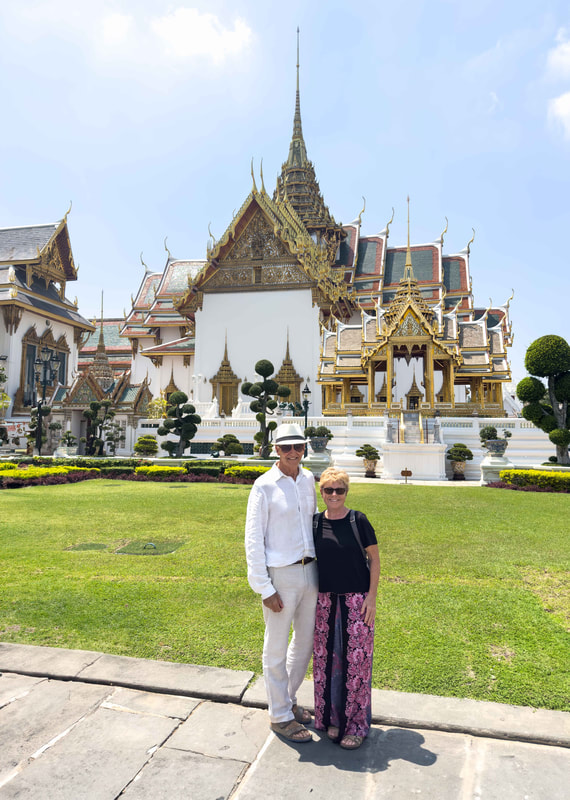
The kings had so many children with many of them receiving a palace of their own. Today there are over 30 current and previously lived in palaces in Bangkok alone. The majority now serve as striking government buildings, museums, schools, etc.
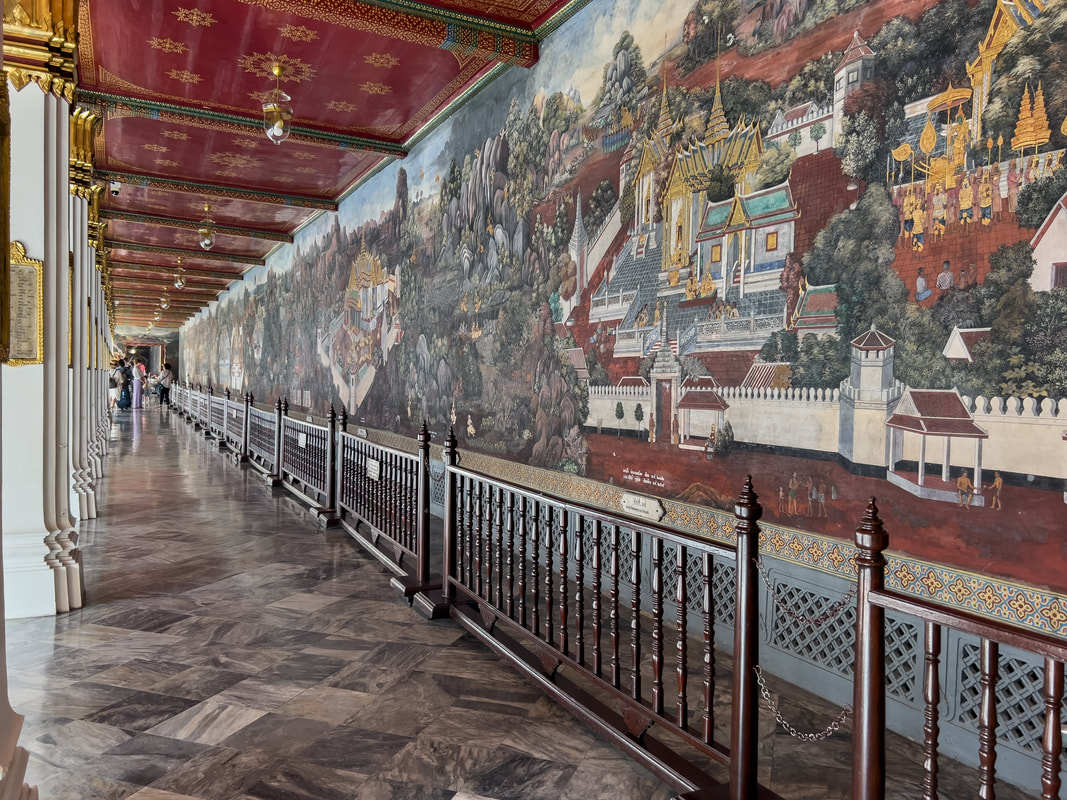
The humidity is so hard on the palace hallways filled with murals that they are restored every 3 yrs.
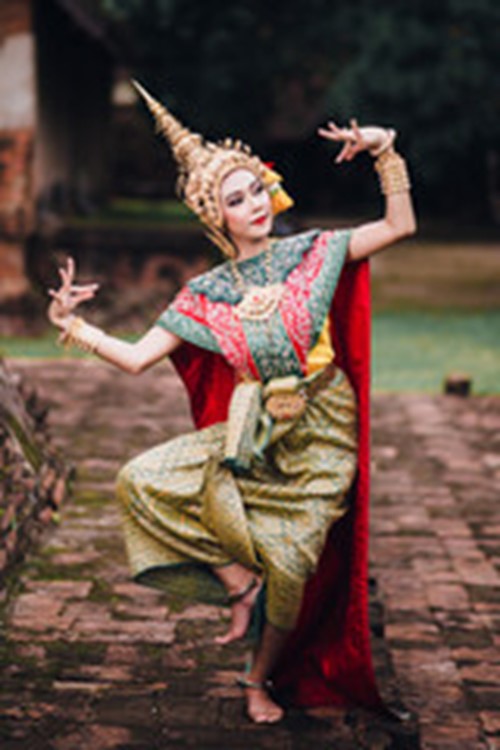
We attended a performance of regional dances over the past 18 centuries, but we weren’t allowed to take pictures, so we used this grainy stock image. What intrigued us most was that the hands seemed pivotal to the dances with the almost double-jointed like shapes and movements they made with their very flexible wrists and fingers. In some dances the finger dexterity was exaggerated with long fingernail accessories used to extend their length.
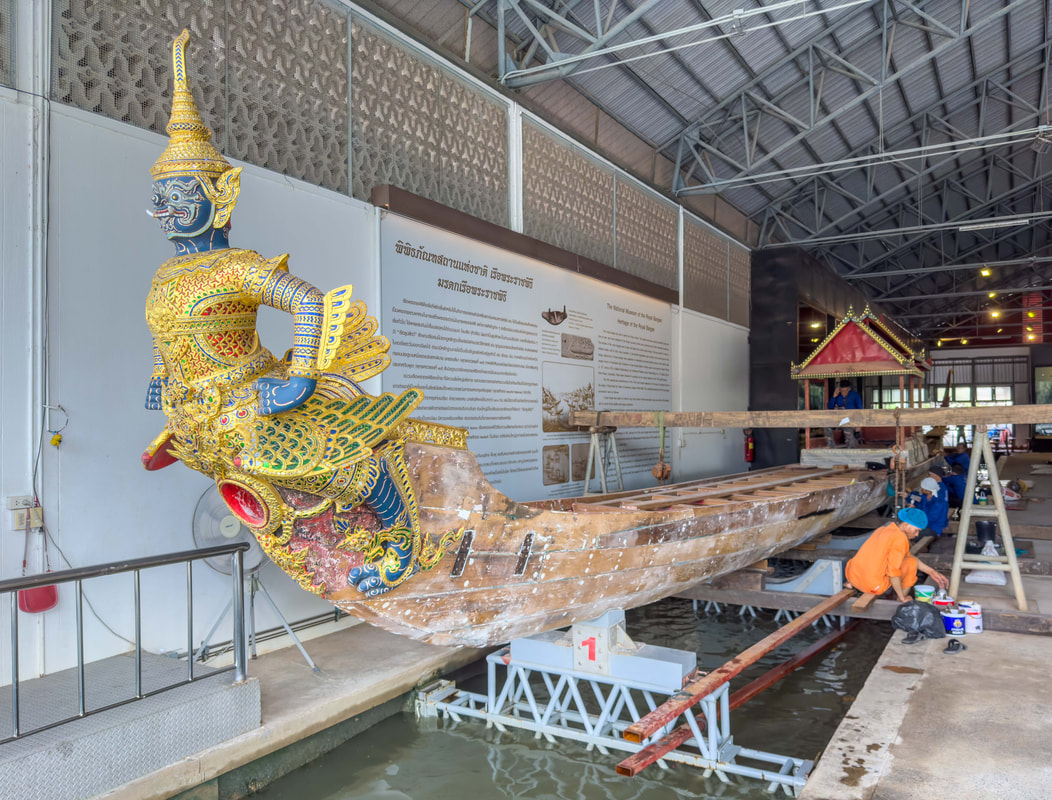
With the wide and mighty Chao Phraya River bifurcating Bangkok and a multitude of small spinoff channels, the waters played an important role for centuries. And the king and his entourage were paddled along those waterways on the royal barges. Still today, for important events, the barges are used by royalty.
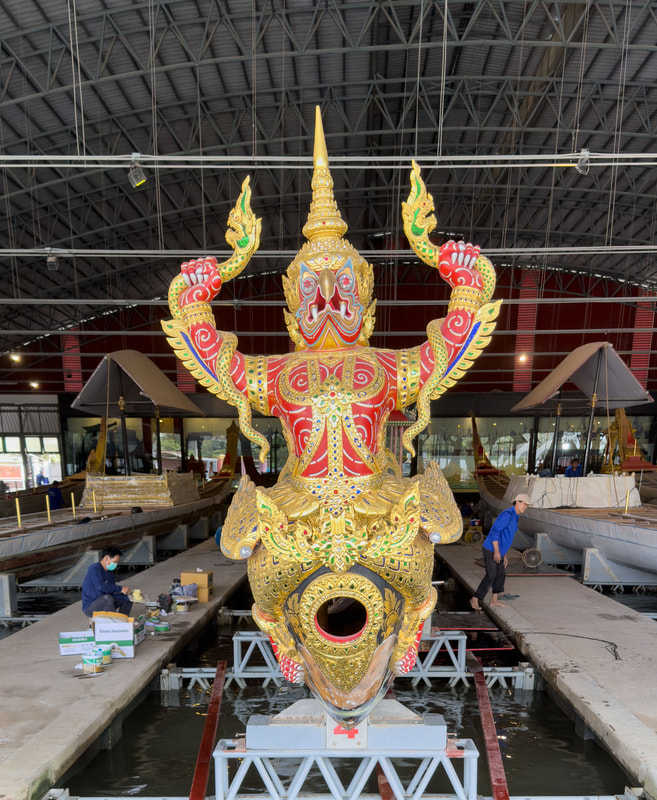
Billed as a Royal Barges Museum, this facility was more about rotating through sets of barges to restore and on the side a few tourists trickled in to wander around on their own. There are 44 barges in total, each decorated with a unique prow, and paddled by up to 54 oarsman.
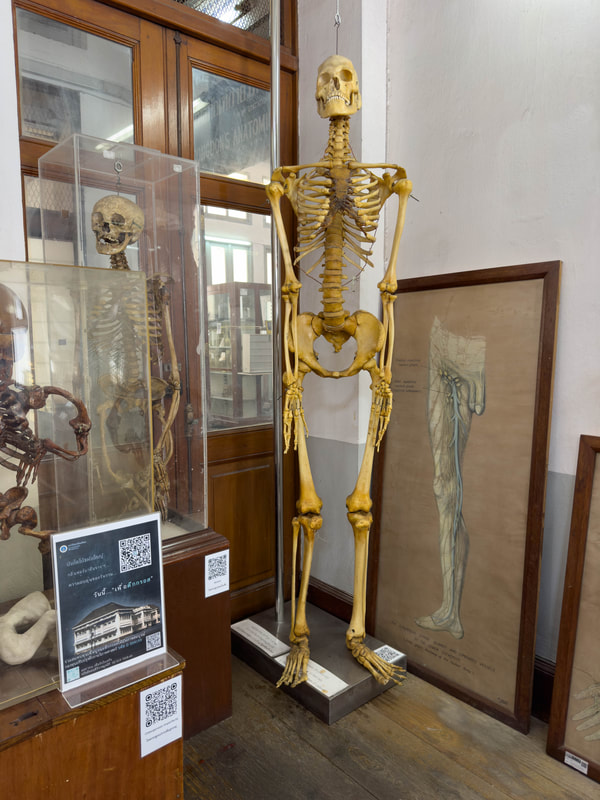
After the barges we headed to another little visited but intriguing site, the Medical Museum. Situated in the city’s main hospital across from the pathology department sat this part museum, part training ground for medical students. Preserved body parts subjected to every manner of injury, medical condition, or suicide shared space with fetuses or newborns where nature had gone wrong. By the time we got to the parasite section Rick had to go it alone. Given the nature of the subject matter, photography wasn’t allowed, but this 7' 10" female skeleton was acceptable. A couple of standout signs which were interesting given that they were in a hospital “herbalist-practice self-care and mindfulness contrary to western medicine“, and “once on pills, always on pills”.
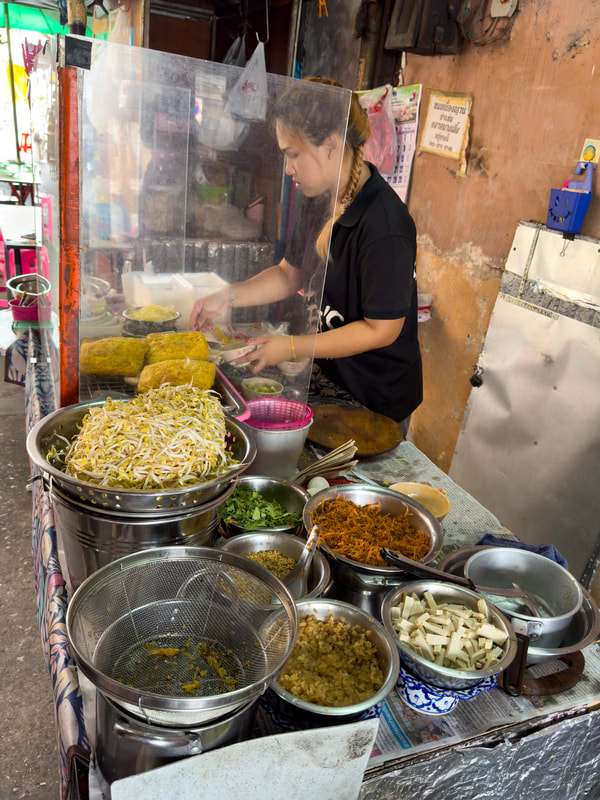
A Chef’s Tour is offered in several countries around the world, but this was our first. We were stuffed after 3 hours of eating twenty different foods across an historic food market, 3-generation small eateries and misc. stops. And all were connected by a local bus, complete with wood floor, and a bone rattling canal boat. My butt and jaw vibrated so much I opted to stand and watch the waterside scenes.
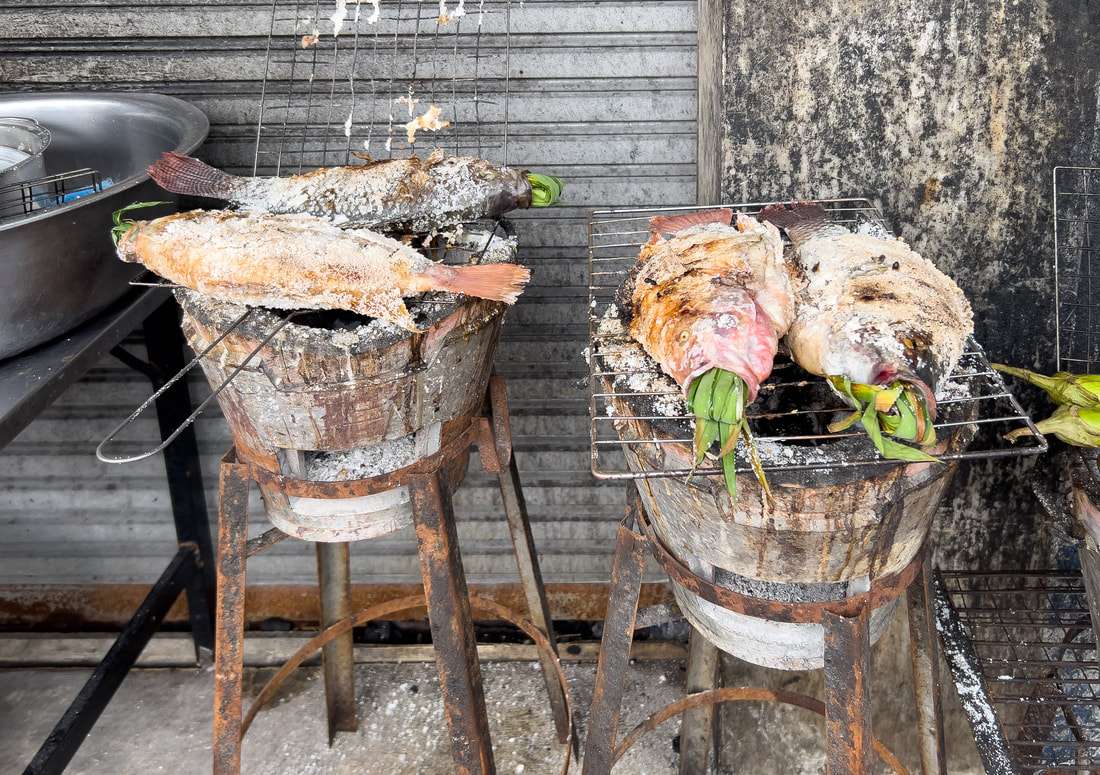
Rick’s favourite was crispy duck in a little family restaurant, and he hasn’t been able to find a replica since. Mine was herb stuffed tilapia cooked over coals. We’ve now been to other street stalls and appreciate more the quality gems that our guide took us to.
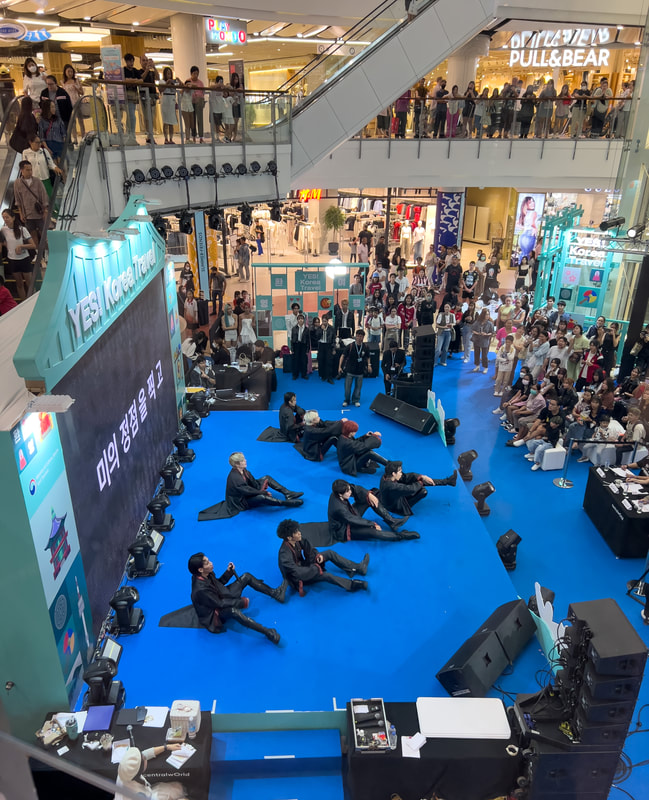
After our Chef's Tour through old Bangkok, we spent the next few hours in the city's largest and glitziest 7-story shopping mall. It was so over the top that even H&M’s clothing store had a huge recording booth filled with musical instruments and set up to record karaoke. South Korea was promoting tourism to its country, and they went big - for hours a collection of performers (boy bands, girl groups and gender fluid dancers) rocked a central stage while food stalls offered Korean specialties and booths were set up for each of the Asian airlines to sell flights.
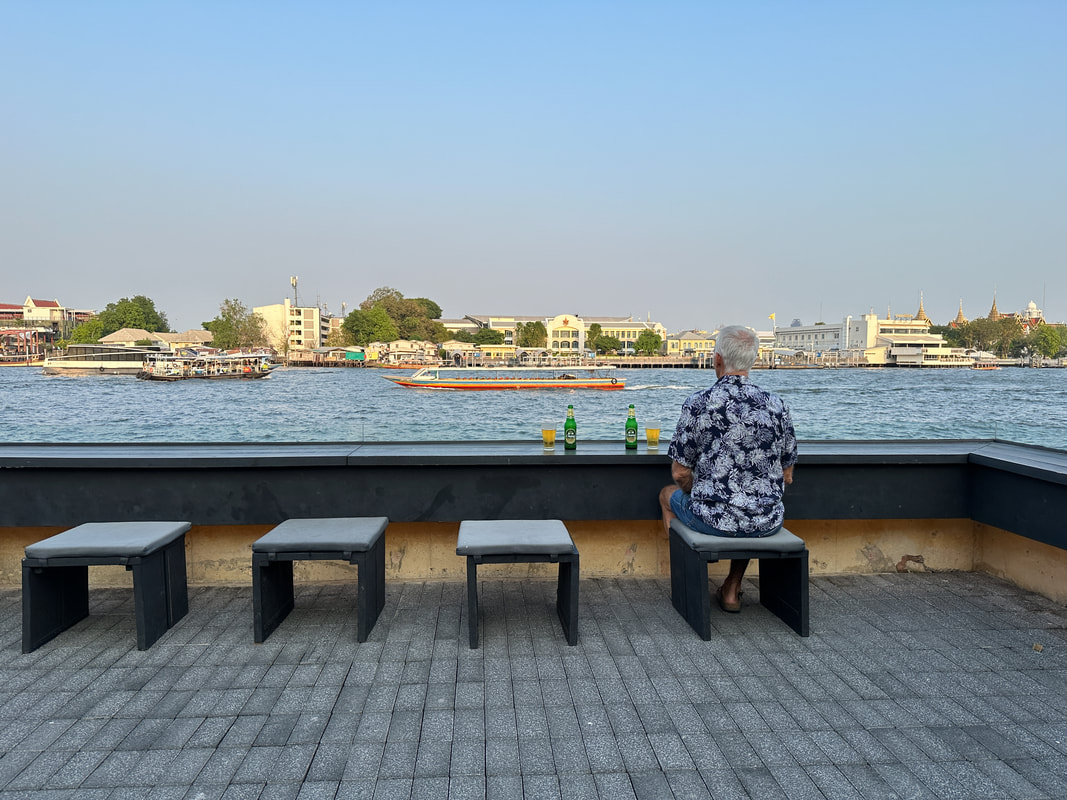
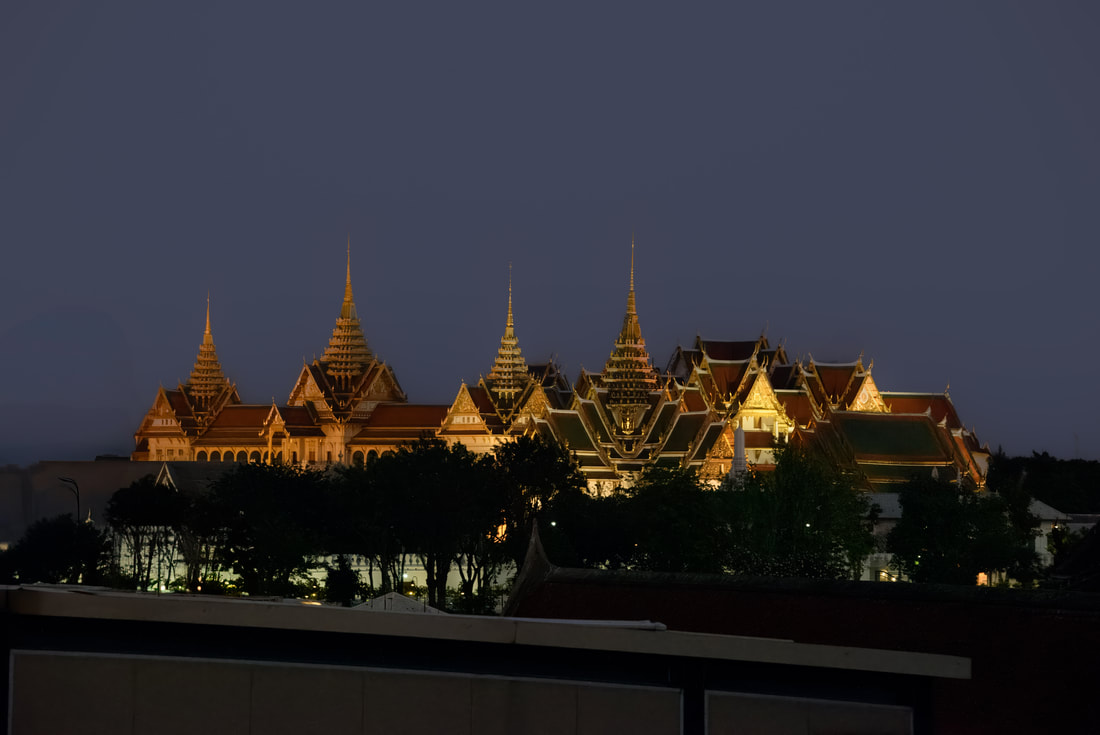
After a good dose of sensory overload, it was back to the calm of our hotel. Rick aced it with this one. Set right on the river with a view of the Grand Palace, so pretty lit up at night (below).
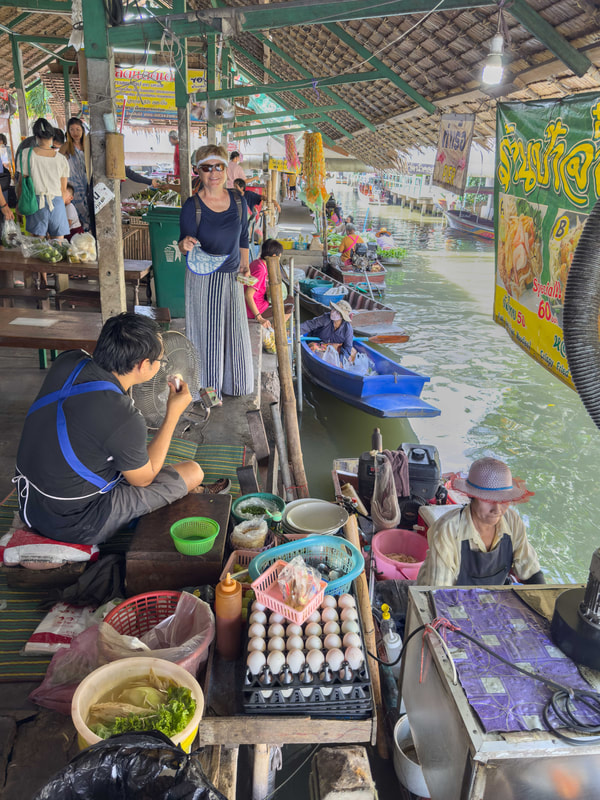
Land and trucks have long since replaced floating river markets, but the occasional small one survives, in part propped up by tourist visits. This one featured a few token boats and then the rest of the market spilled over onto land.
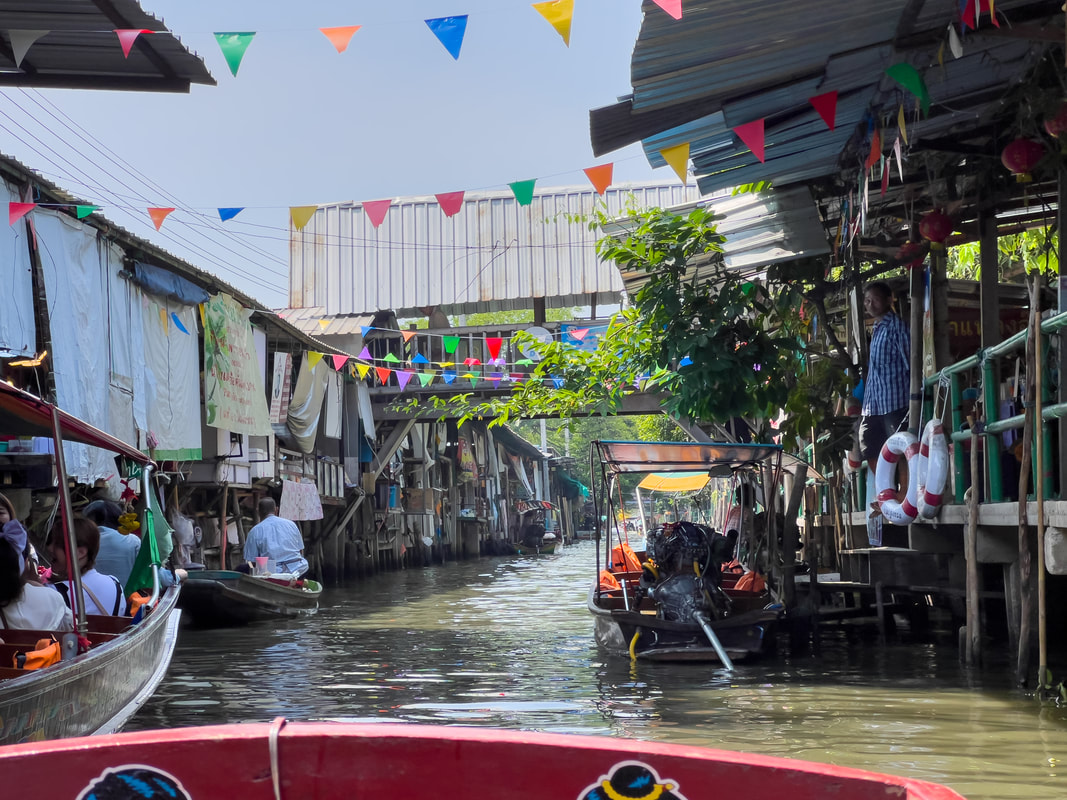
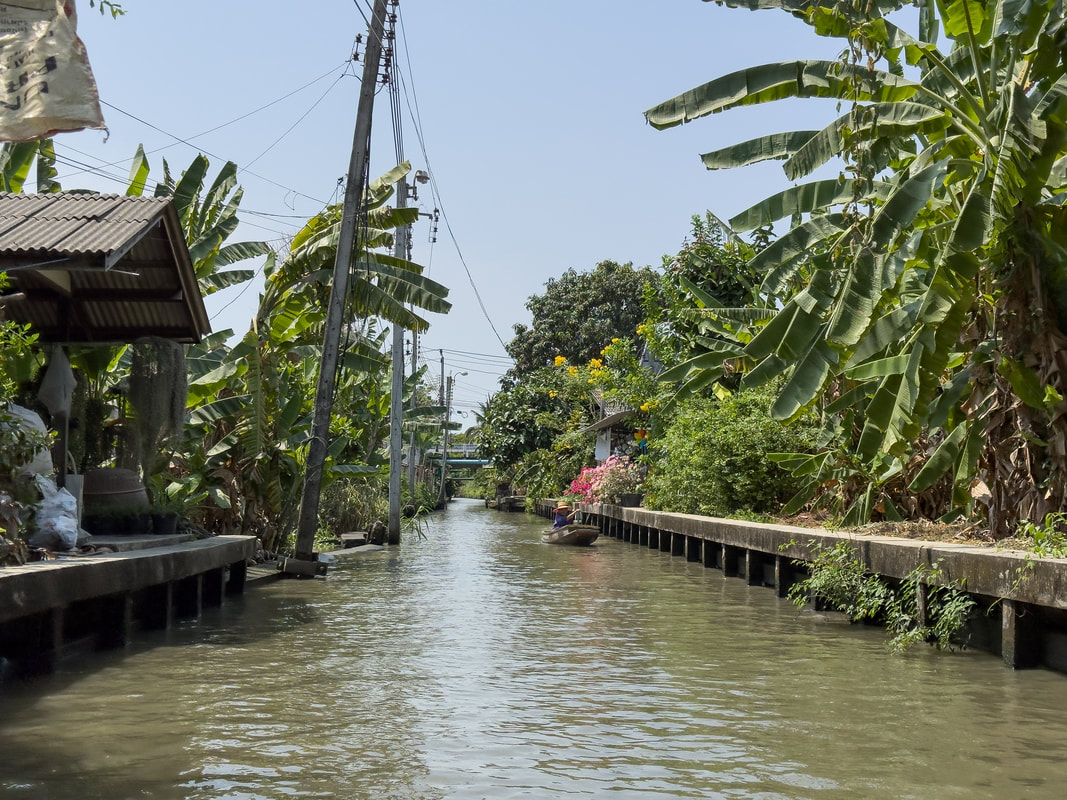
Long-tail boats ran 40min loops along the canal shared by the floating market. We thoroughly enjoyed having one to ourselves while we breezed by plantations, gardens, small homes and businesses and the occasional local sharing the water.
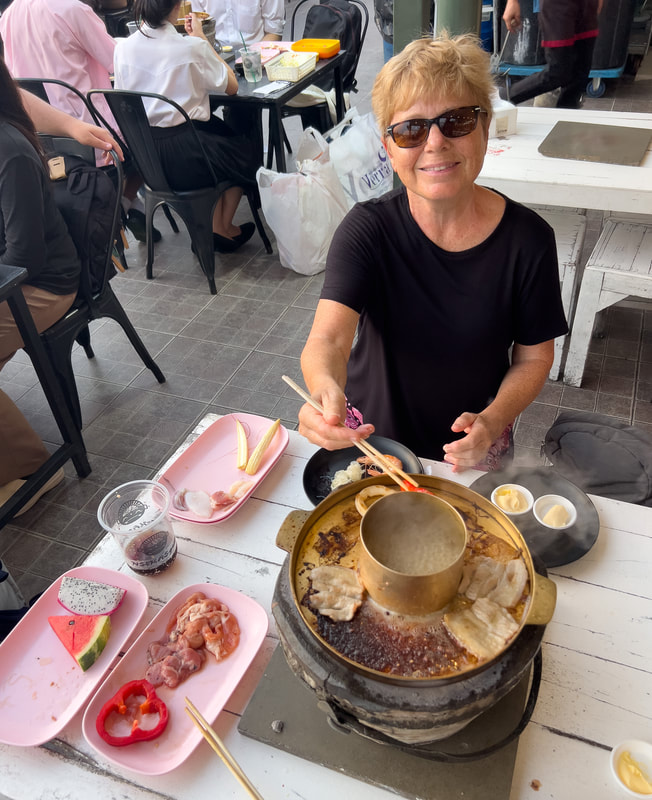
This Thai sukiyaki restaurant catered to ethnic Chinese diners, and we were the only westerners. After a self serve selection of meats and vegetables it was time to cook. What we hadn’t factored in (on this 34C evening) was sitting in front of a burning charcoal filled ‘oven’ to cook our own meal. And when the oven got too cool, they’d replace it with another. It was fun, but we wouldn't sweat through another.
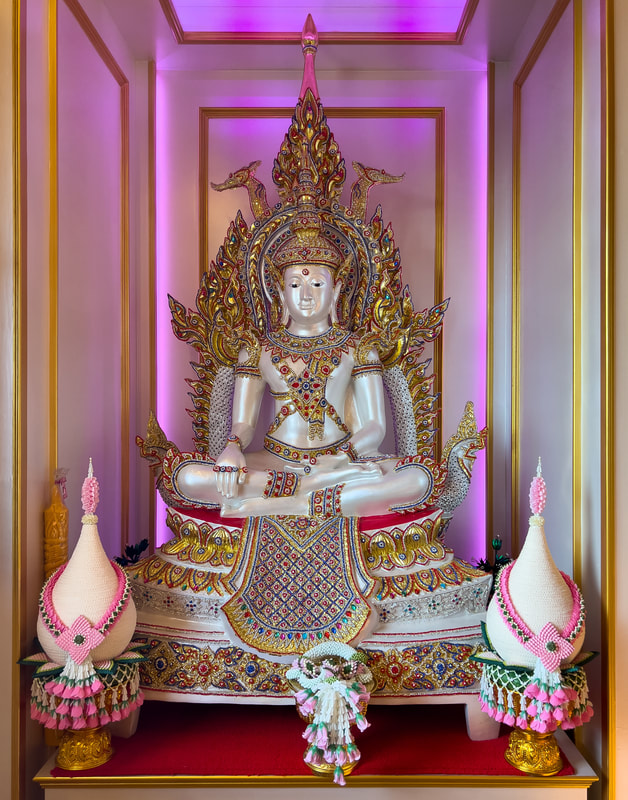
Bangkok’s Buddhas – we’ve seen so many buddha statues that I tried to google what country had the most, but couldn’t find anything. Wats (temples) often have a multitude and their portrayals run the gamut from somber to whimsical.
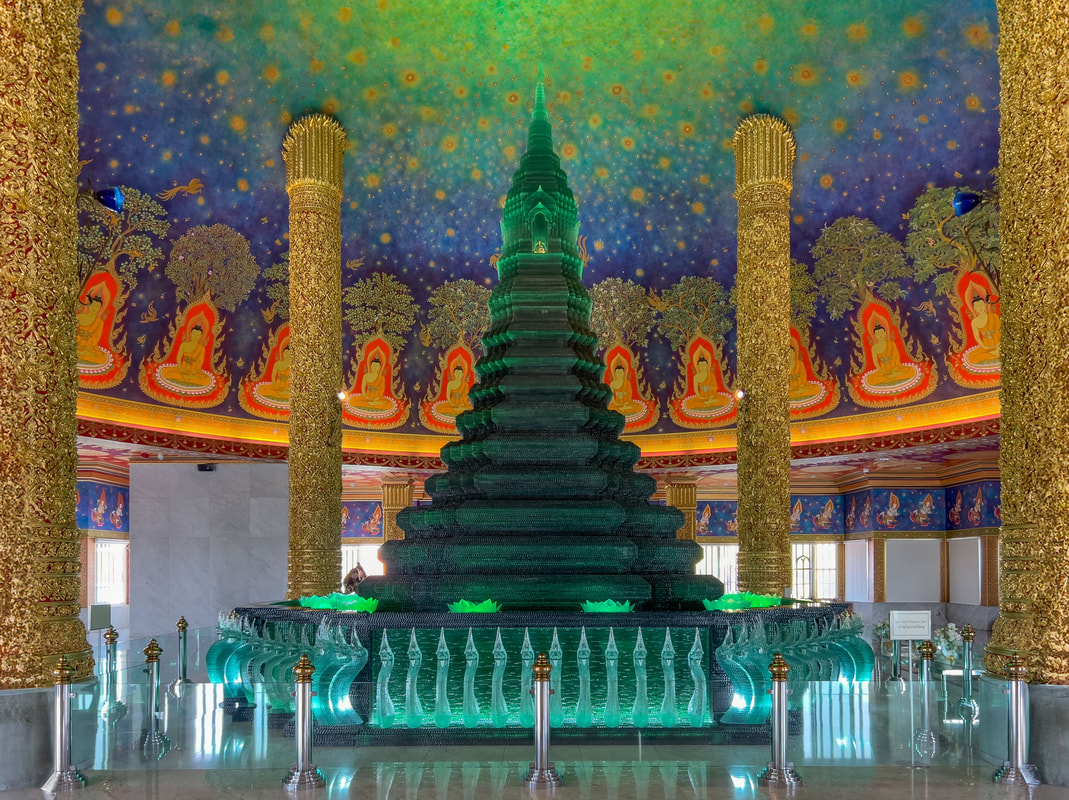
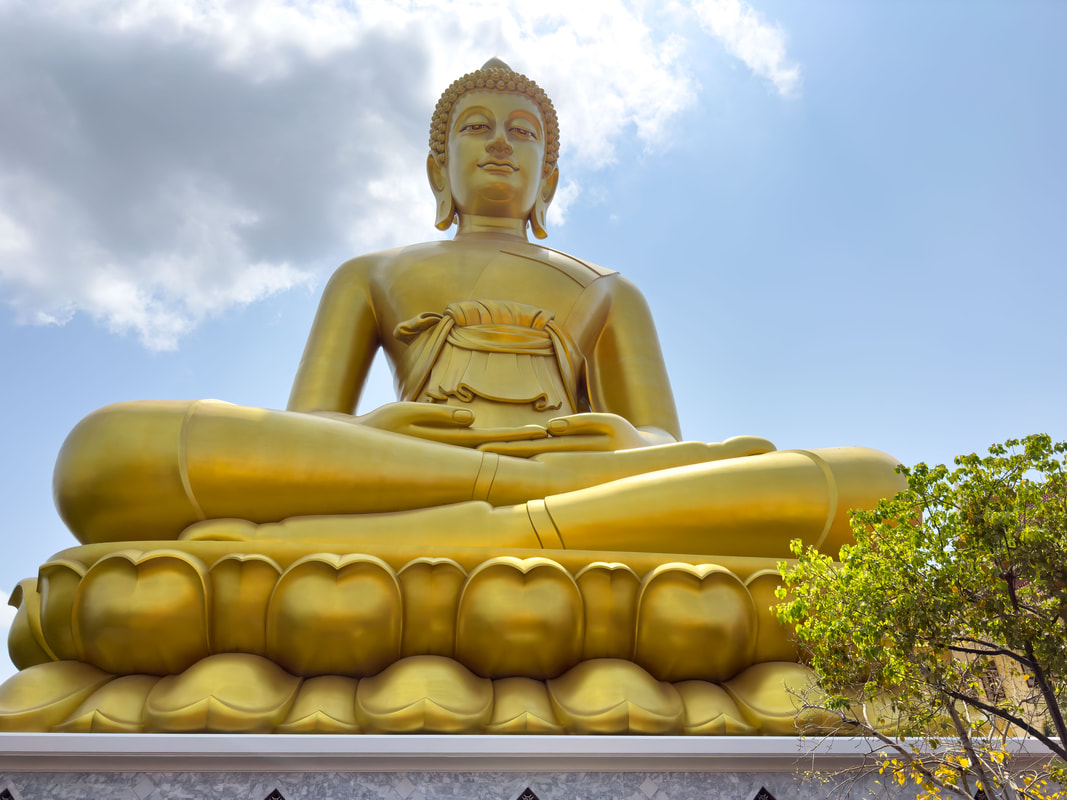
The 64m high Buddha statue in Wat Pak Nam Temple is the tallest in Bangkok. It’s an unwieldy structure to capture a shot of when you’re anywhere near it.
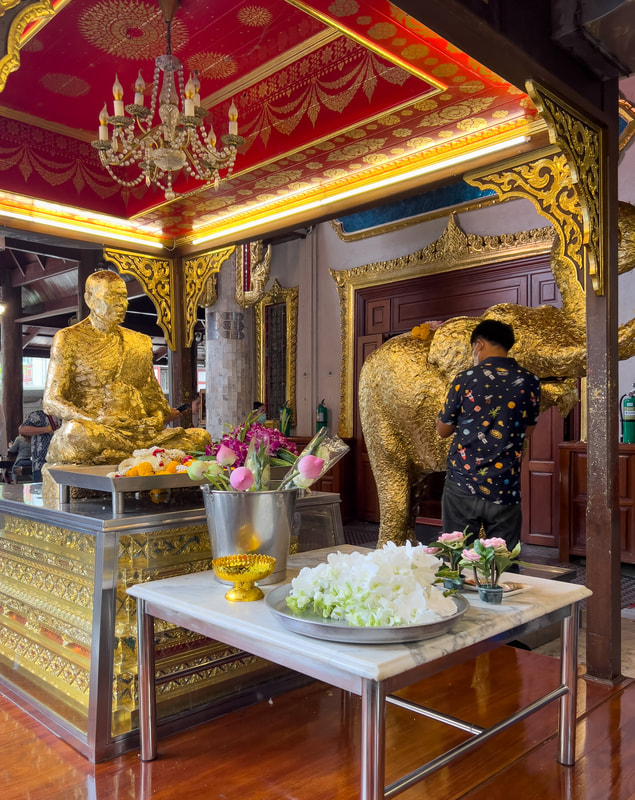
Each Buddha is an opportunity to leave an offering and sales of incense, flowers, messages, etc. are never far away. And of course cash is always welcomed. The level of adoration and money spent is on a level we’ve not seen before. Above: worshippers buy god leaf to stick onto the elephant before praying to Buddha.
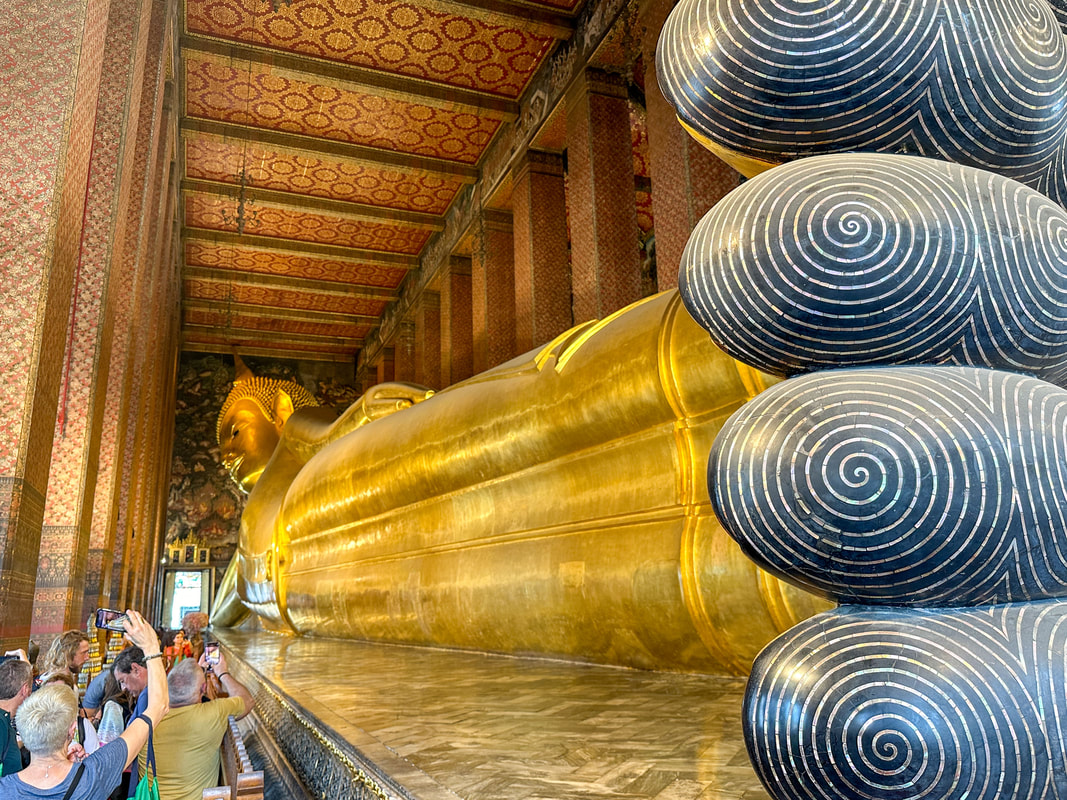
The Reclining Buddha - 15 meters high and 46 meters long.
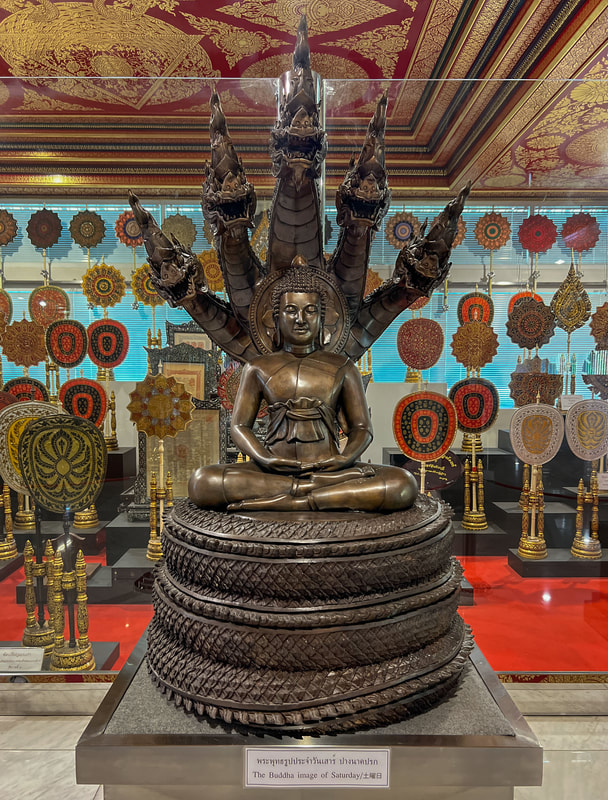
Certain events are believed to have happened with the Buddha. For each day of the week he is represented in a specific posture to associate it to an event. "The Saturday Buddha image is sitting in a full lotus position in meditation on the coiled body of the Naga Muchalinda [snake-like being] that uses its head as a cover against rain."
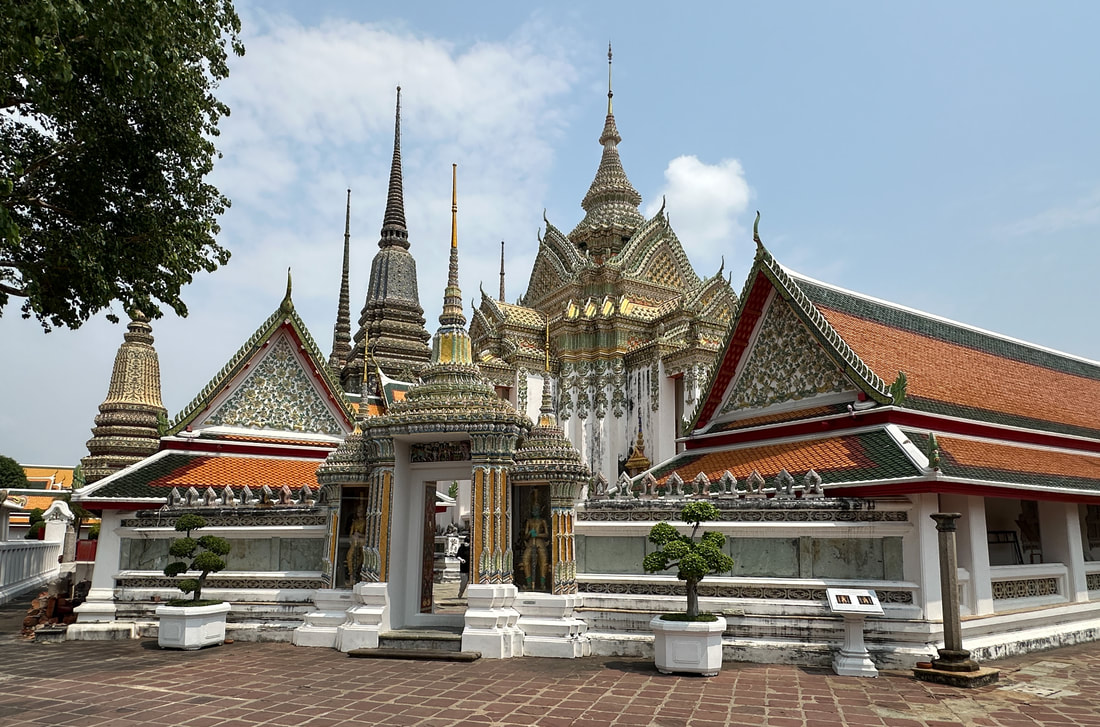
And then there are the wats (temples) that house the Buddhas. They are made up of several buildings. Usually, they’re so packed together its hard to get a good picture, but Wat Pho (home to the Reclining Buddha) offered a pleasing collection of architecture.
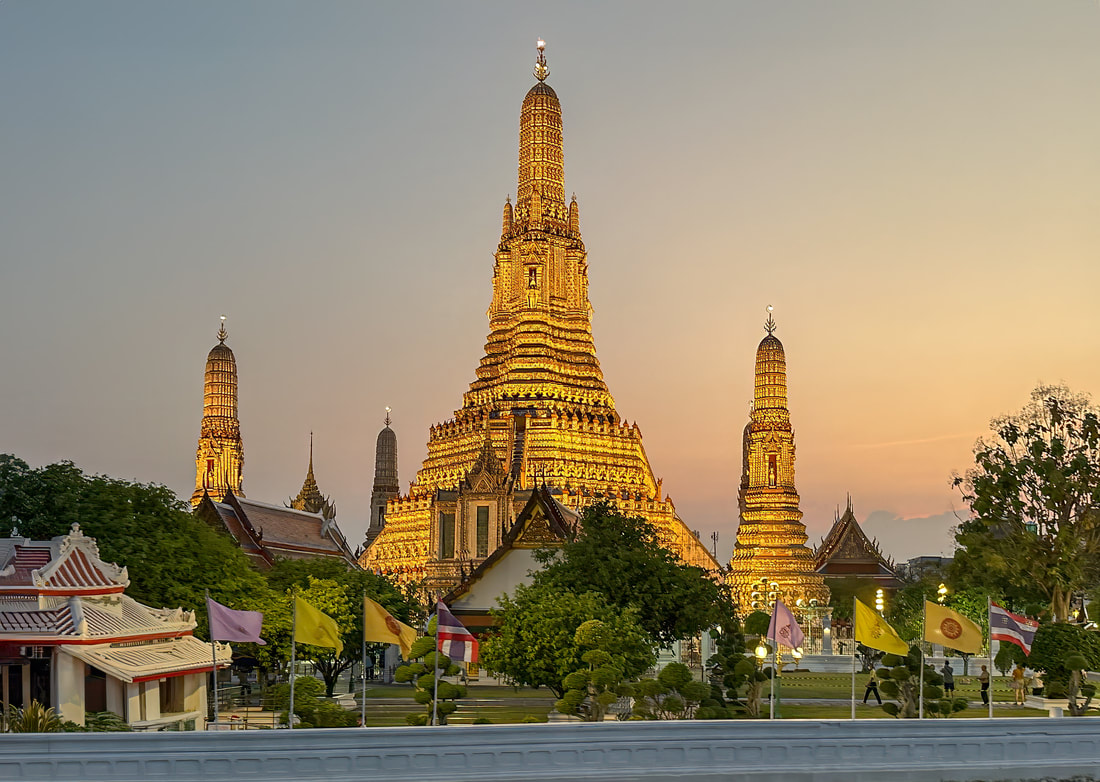
Wat Arun is the most popular one in the city and at night its gorgeously lit up.
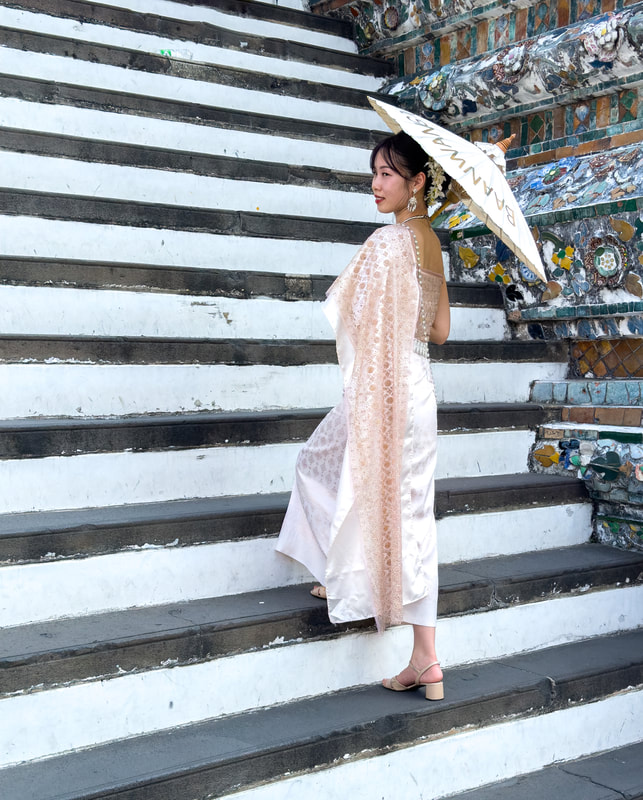
By day, Wat Arun is swarmed by the faithful and the curious plus a lot of girls dressed up for photography sessions.
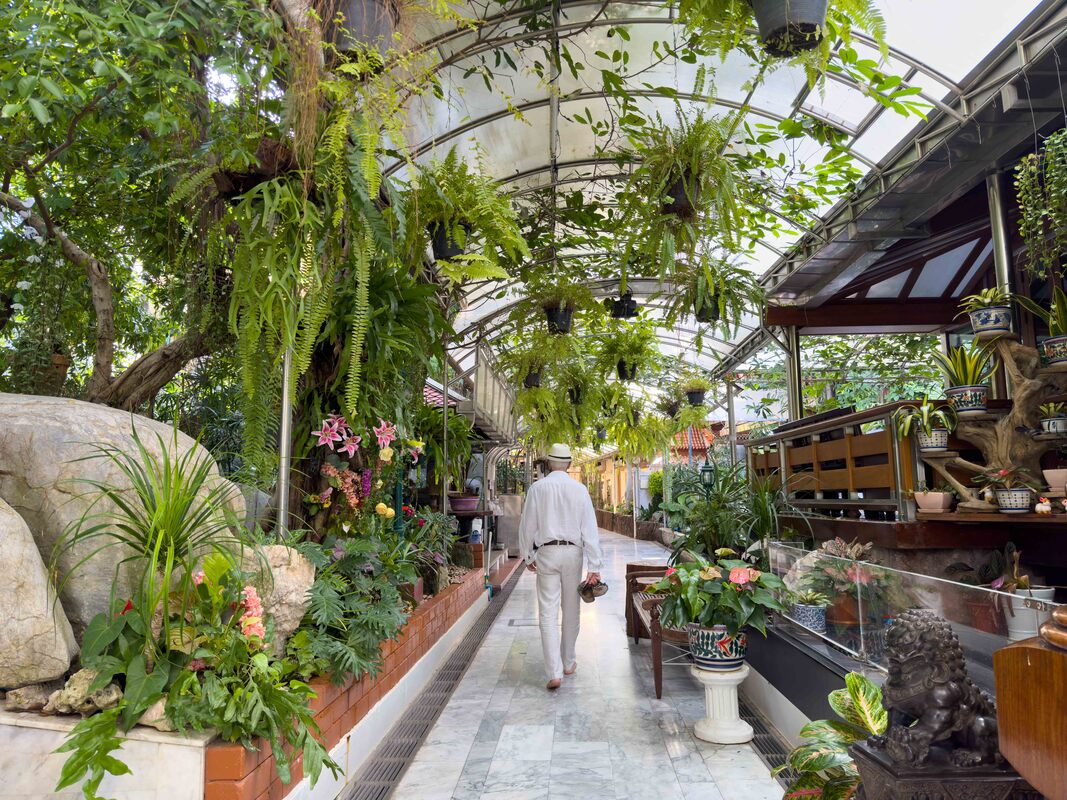
Inside the Paknam Temple and others there were oases of calm.
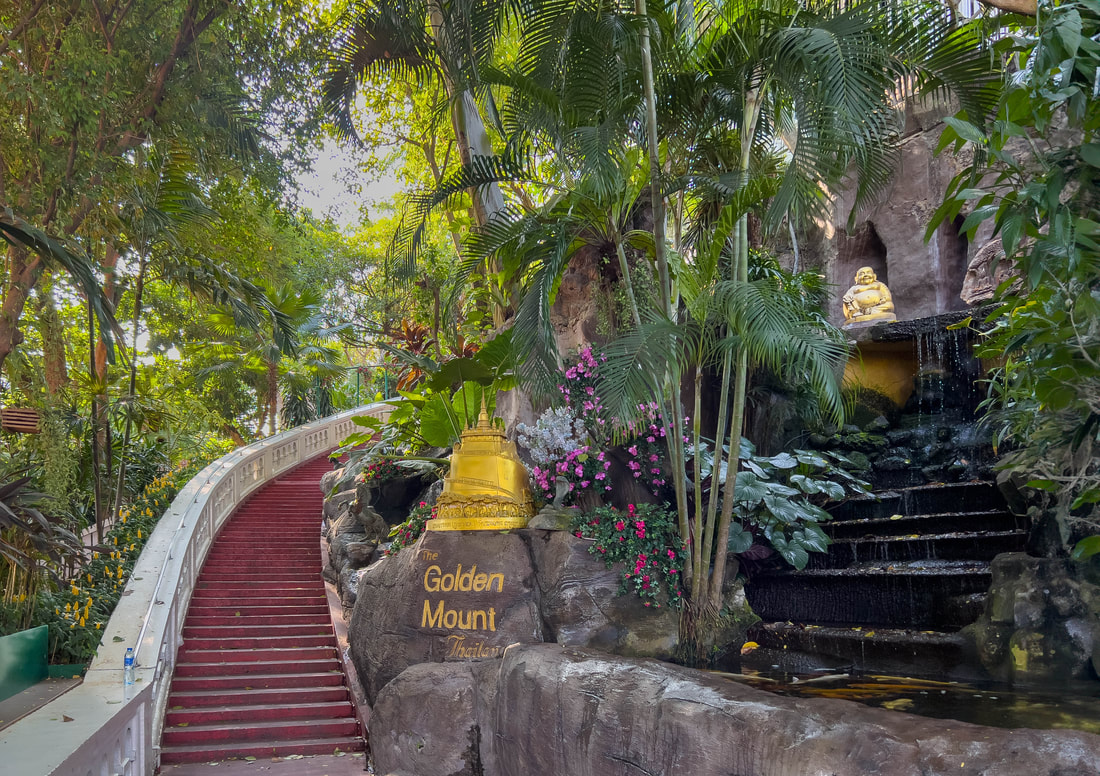
Wat Saket and The Golden Mount was reached by a circular stairway with 320 steps (Bangkok’s only hill). With lush vegetation and water features all around it was a lovely.
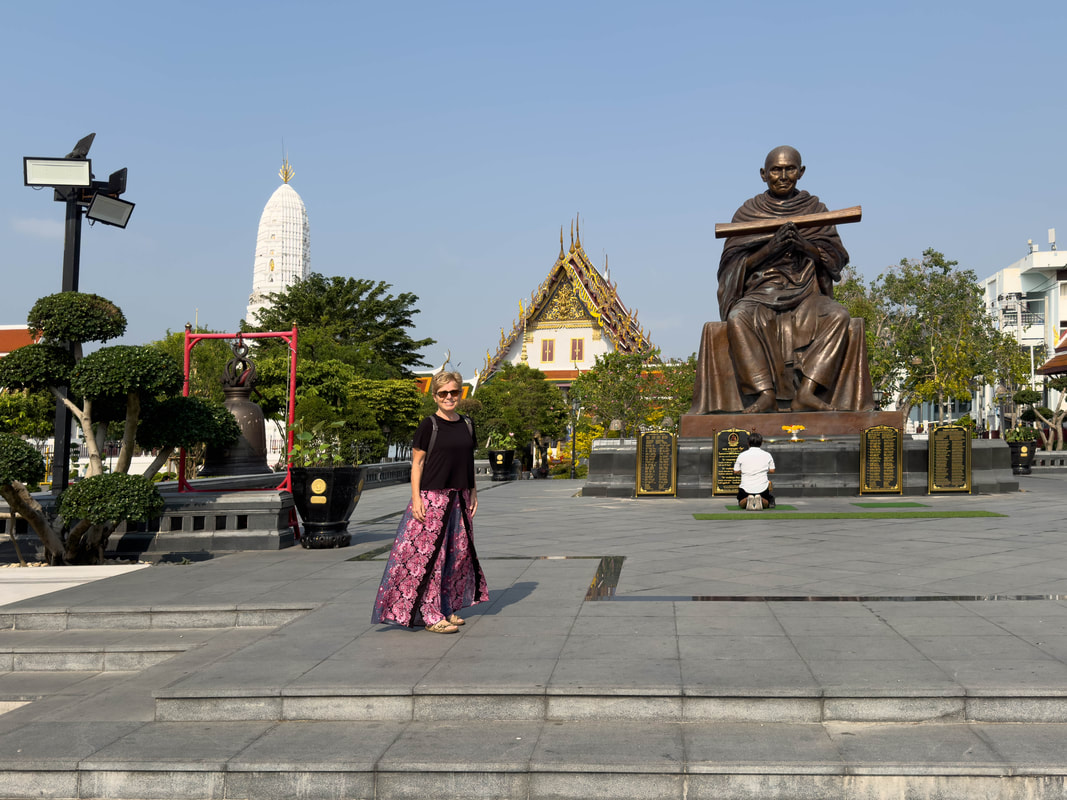
Beside our hotel was the Wat Rakhang, a pretty place to pass through on our way to the ferry pier to start each day. This pic is also a shameless plug for my new favourite travel garb. These wrap around flowy pants are so cooling, protect from the sun and feel dressy when the breeze catches them. I've been accumulating them at an embarrassing rate.
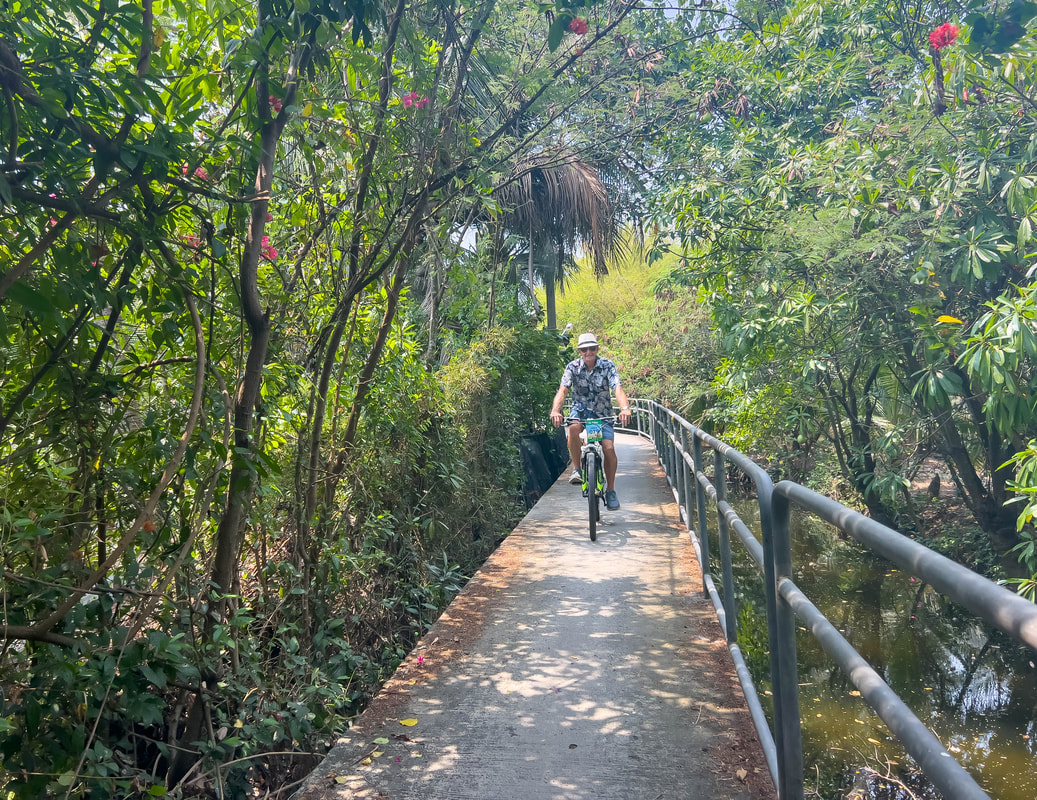
In the south of Bangkok the Chao Phraya River makes a sharp bend, leaving the body of land caught in it to be considered the island of Bang Krachao or the Green Lung of Bangkok for its healthy environment. Removed from the hustle, this place was bike-friendly and serene. The quiet main roads had clearly marked bike lanes. And raised cement paths intersected the main road to provide access to small homesteads and farms. Pedestrians, motorcycles and bicycles all shared the narrow passages.
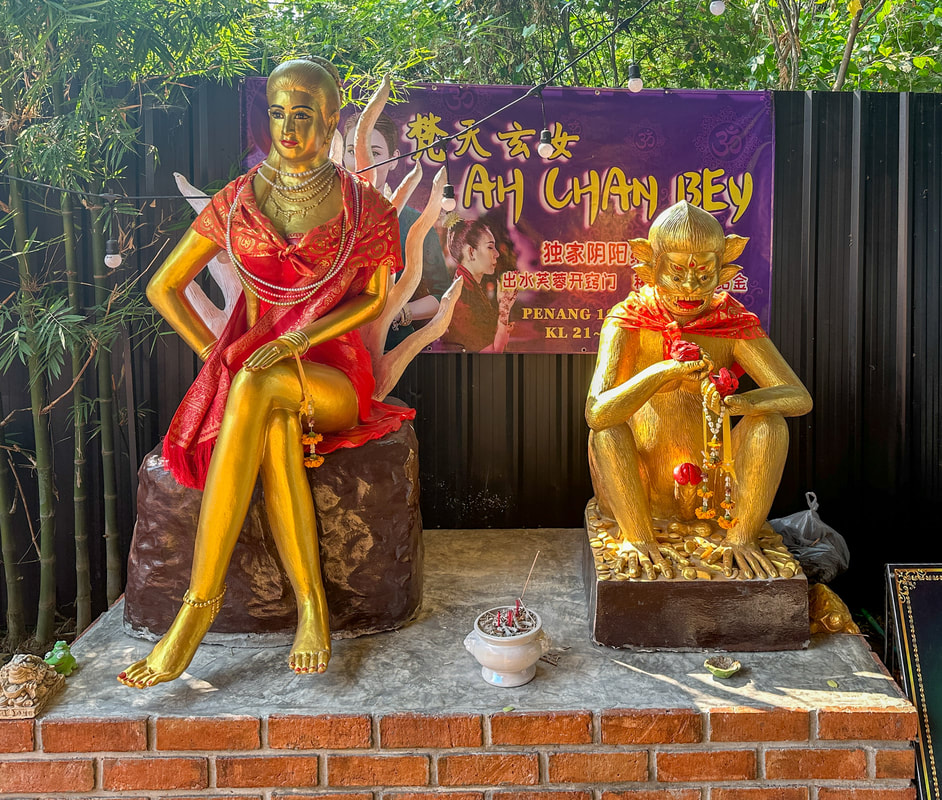
A small wat on the Bang Krachao featured this set of figures. We only saw this once and we’re guessing its speaking to the perils of females in seductive clothing.
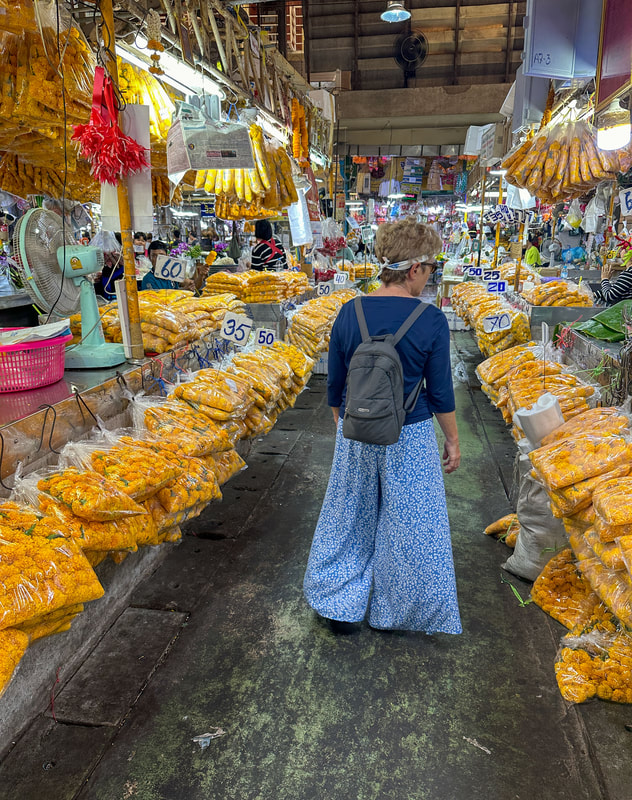
Flowers were dropped off from the surrounding provinces to the flower market the previous night and this morning everyone was busy buying, selling and moving the goods. This cycle repeats daily. Above, bags of marigolds ready for making garlands. Sidenote: Although it looks like I'm trying to resurrect the headband days of the 80's, I've actually started wearing one to keep the sweat from stinging my eyes. Have I mentioned that Bangkok is hot and humid!!
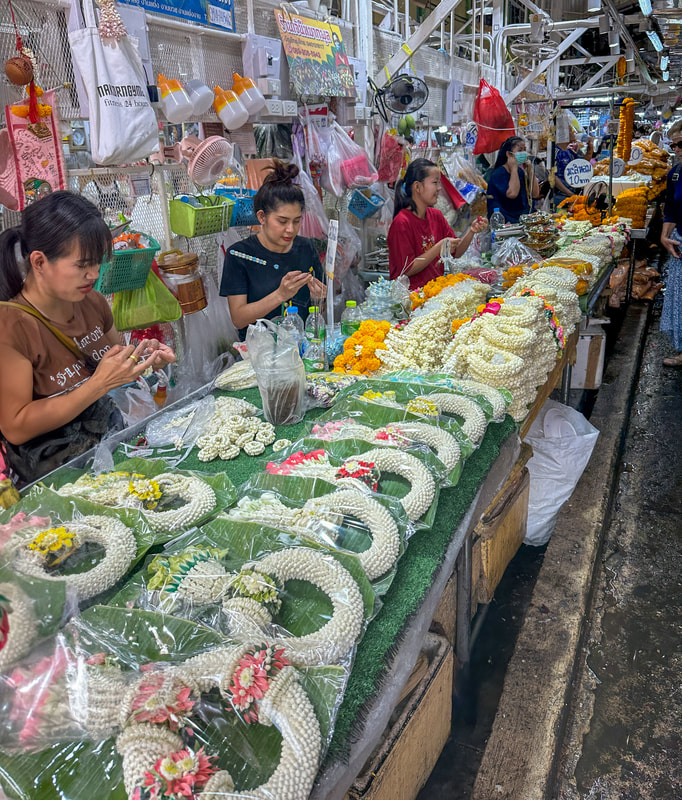
Within the market, lightening fast hands created the garlands and arrangements, often used as offerings to Buddha at the temples - each colour denoting a quality Buddhists aspire to.
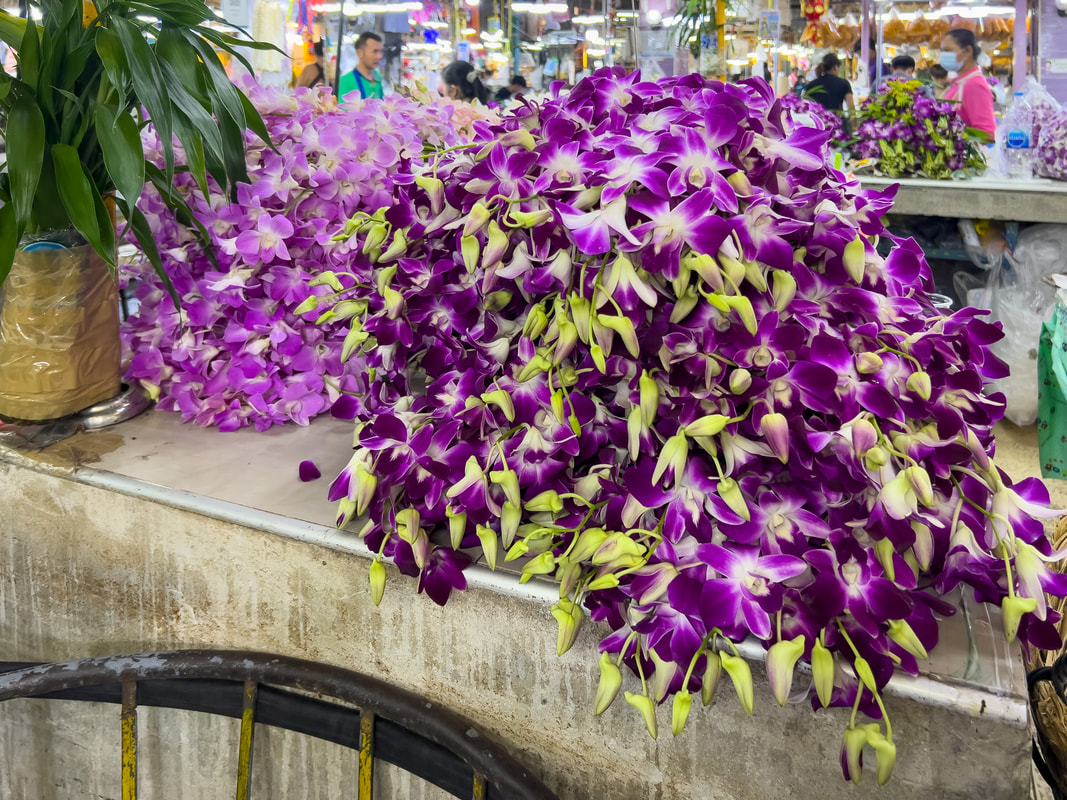
Relative to food or goods in-country, the prices for flowers were less. A good-sized handful of stems of orchids went for 40 cents CAD. And they’re used everywhere - in just one lunch we had 4 orchid blossoms between our plates and drinks.
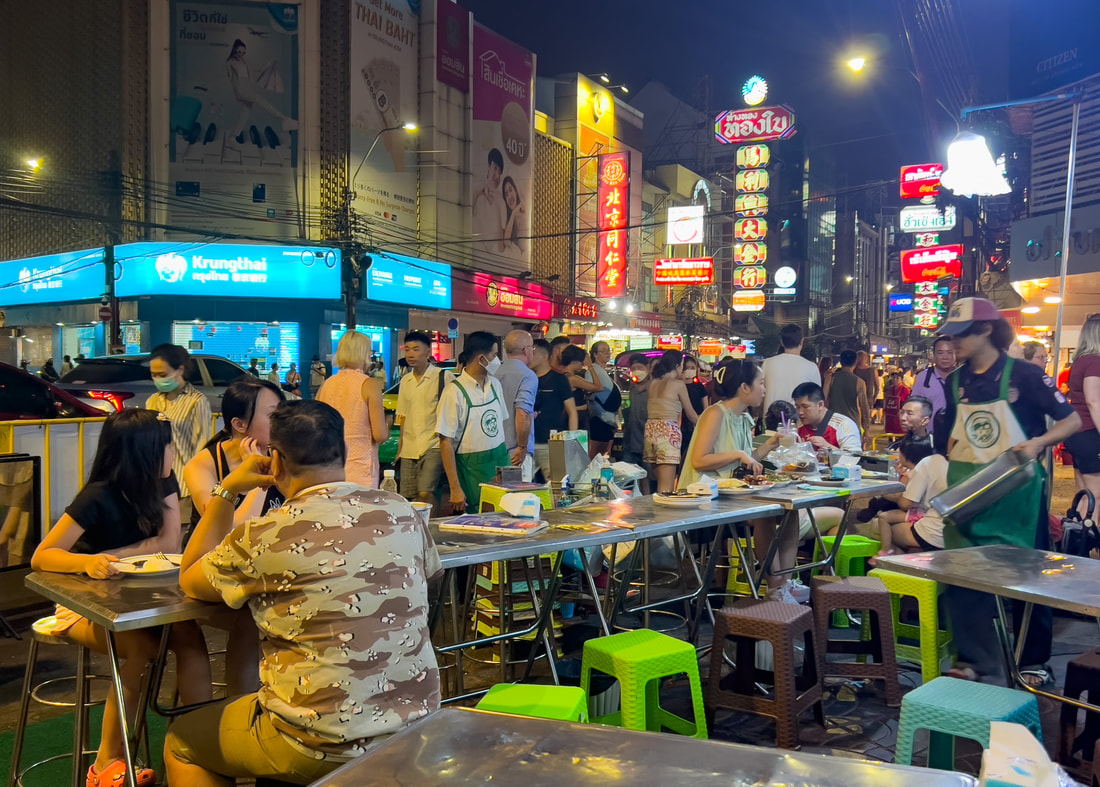
Dinner in Chinatown – for those who loved seafood, this was the place to eat.
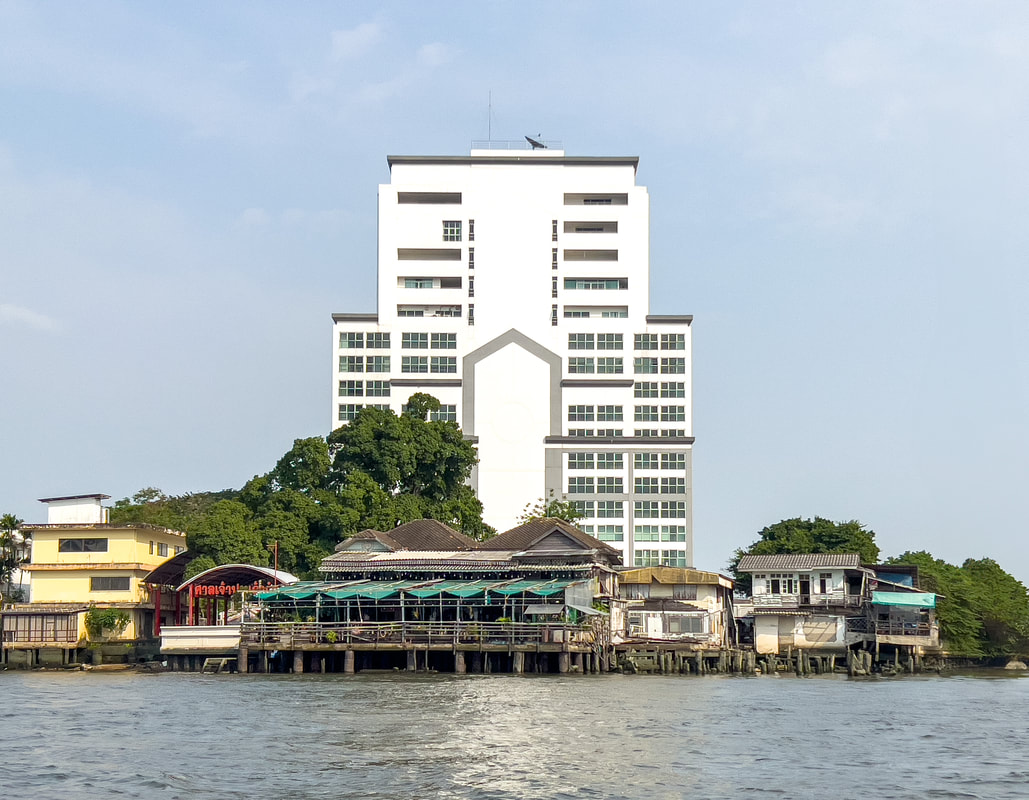
While generations old riverside homes allow families to maintain their way of living, their riverfront property has become more valuable. Developments are closing in and its difficult for residents to provide proof of ownership from a time when such formalities may not have been in place.
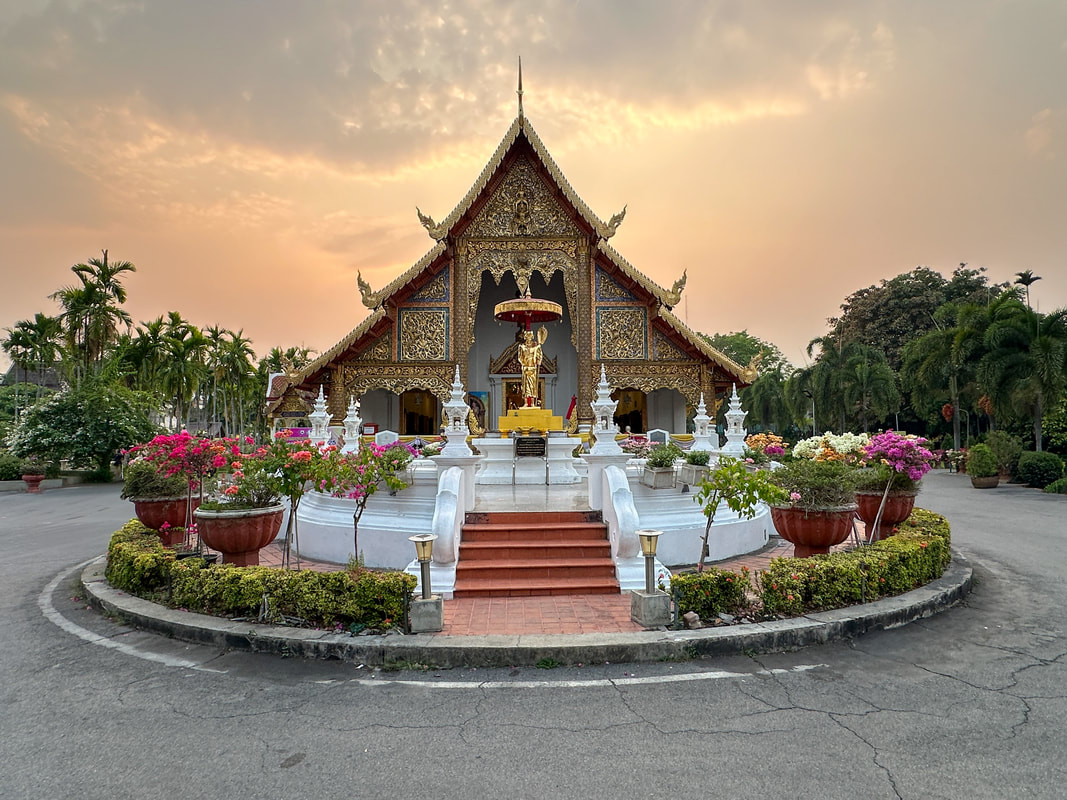
Chiang Mai is in the mountains, providing cool overnights and days that start at a perfect 27C. Unfortunately, each Feb/March the harvested fields are burned causing the air quality to be so poor that travellers are warned about visiting then. There was a day we were here that it had the worst air quality in the world. Each night the sun set red. Rick suffered in Jakarta while I was fine, but it was the opposite here with my chest feeling like it was being slightly pressed on. That said, in retrospect we considered returning to spend more time wandering the charming walled old town and the ancient moats (canals) that surrounded it, but the overall SE Asia heat was getting to be too much by then. (Chiang Mai, Mar 14-18)
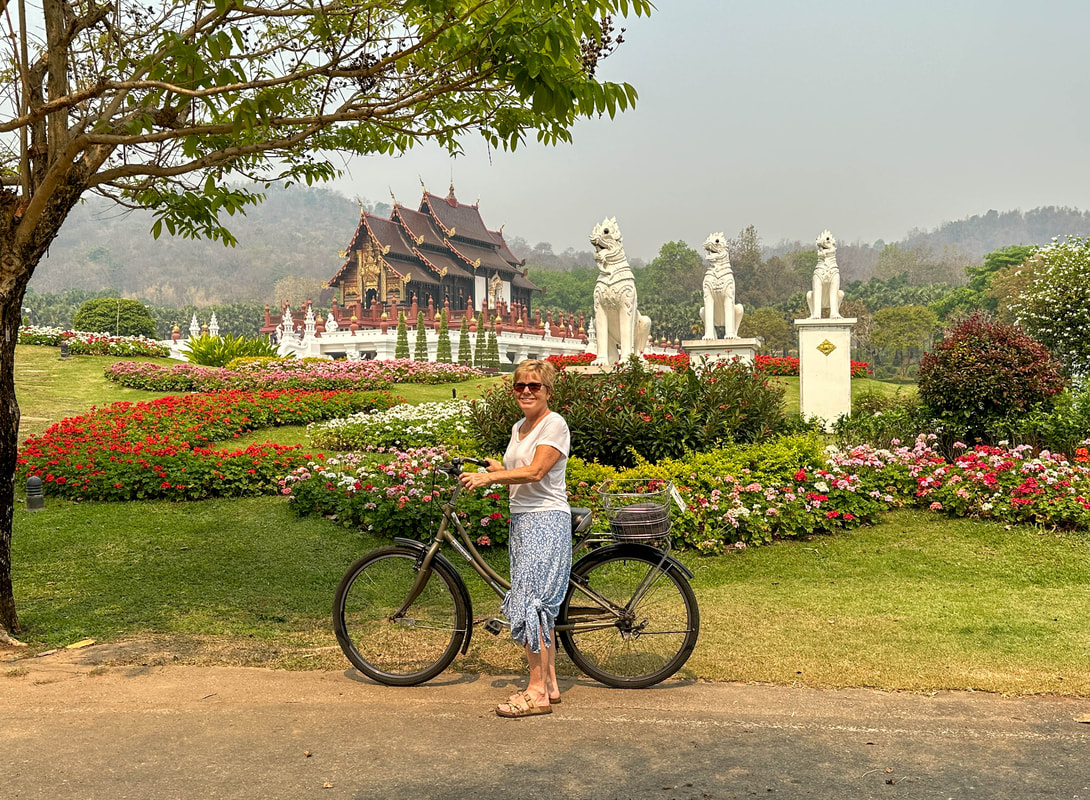
Although we haven’t seen many fields of green rice paddies, a consolation has been the trees with their frangipani and yellow, red and orange flowers along with bougainvillea and orchids everywhere. And we sought out formal gardens. The Royal Park Rajapruek was part of an agricultural research center. We spent a blissful day biking around while traditional music played quietly in the background. The wat-shaped Royal Pavilion (above and below) was the centerpiece.
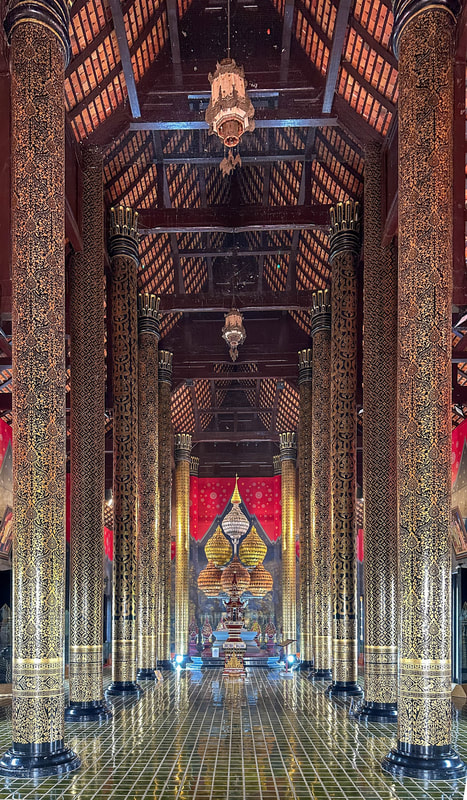
Royalty is highly revered, and the king is considered a spiritual leader. Inside the Royal Pavilion the wall murals depicted the late king (who died after the building was constructed) as a man of countless talents who shared them with his people to further their quality of life.
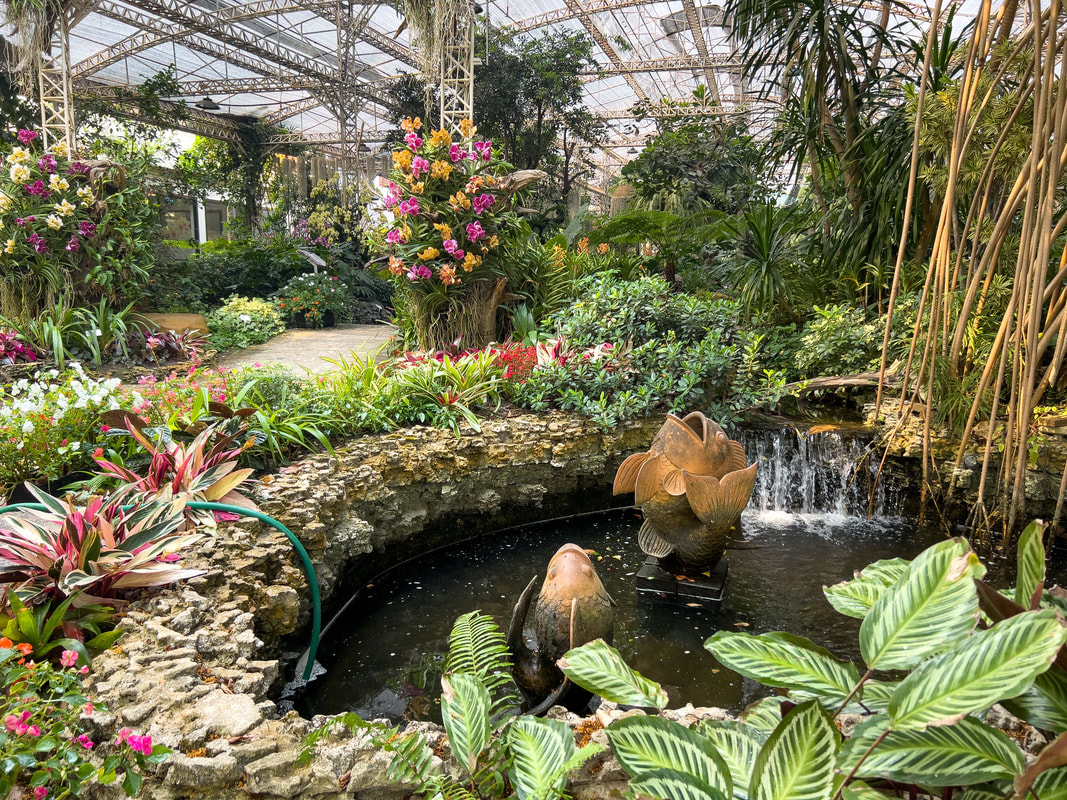
The most beautiful pavilion showcased orchids and the most surprising was the greenhouse growing marijuana as part of the research center (comically, double chain link fenced and locked :)
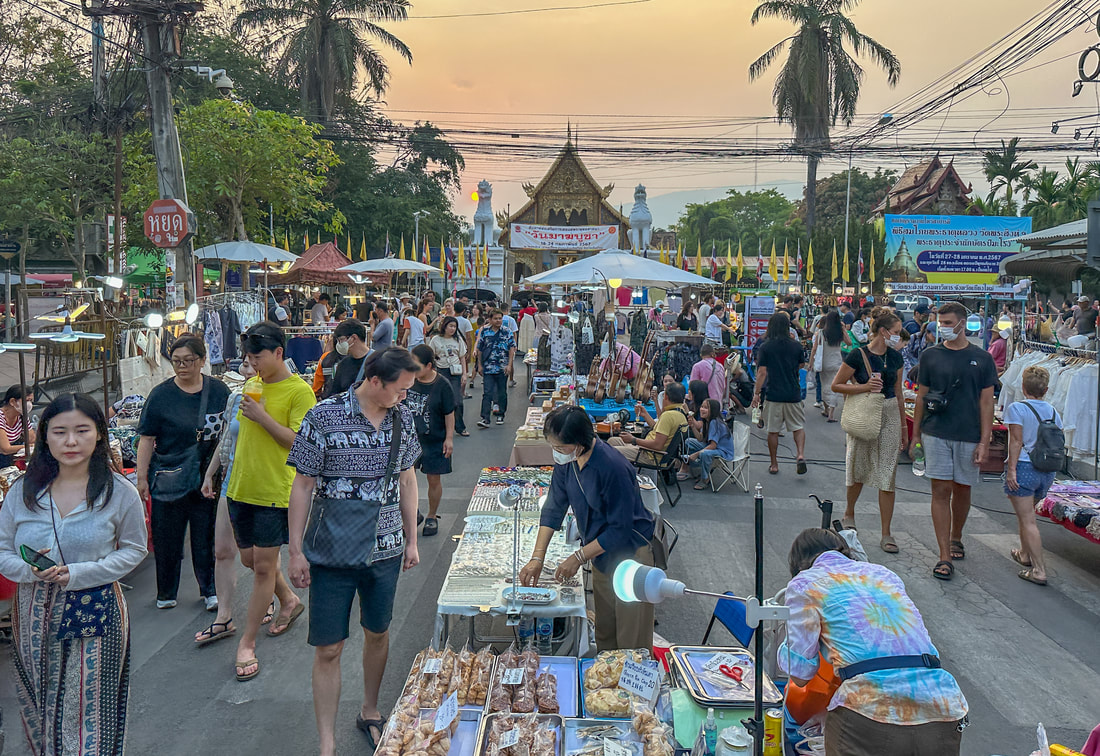
On Sunday, Chiang Mai’s main street is closed to traffic and dedicated to artisans. Almost a kilometre in length plus side streets, it took all evening to make our way through the countless assortment of homemade articles.
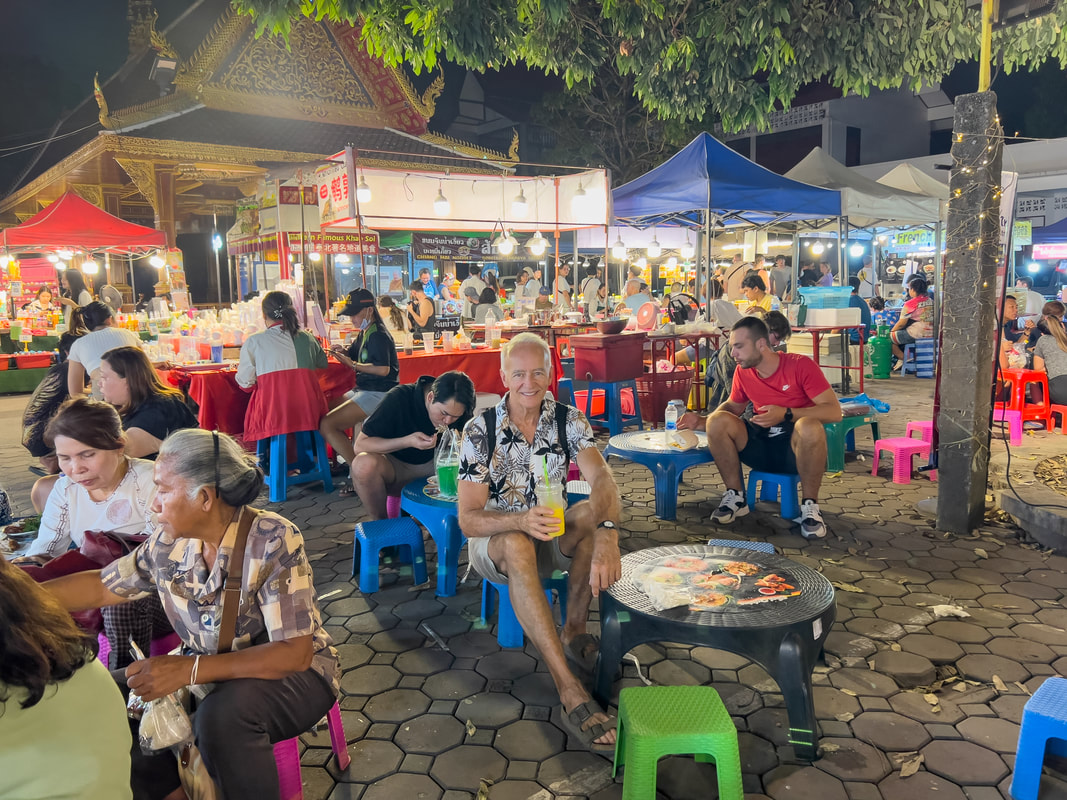
To add to the options available at the street stalls, the wats became food courts. Our goal was to try only foods we hadn’t eaten before. The stuffed Japanese mini pancakes were yummy, but the coconut pie not so much. I've loved the ubiquitous Kate-sized table and charis.
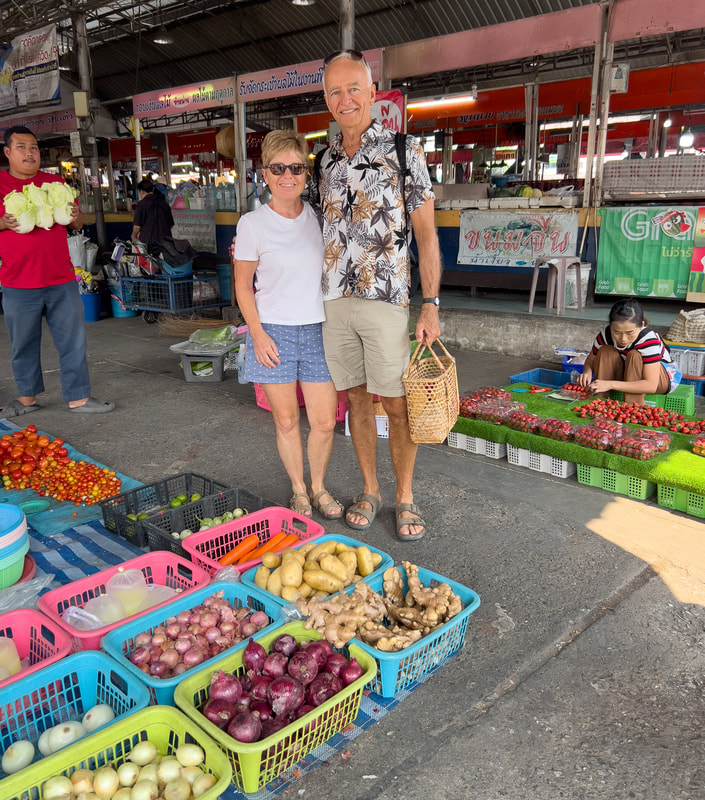
While Rick can have anything on the menus, for me cooking courses are a way to adapt the country’s classic dishes so that I too can enjoy them. The northern Thai class started at the market where our chef got top marks for taking his own refillable containers. In a sign of modern times, some vendors allowed you to pay using their QR code tied in with a payment app popular in the country.
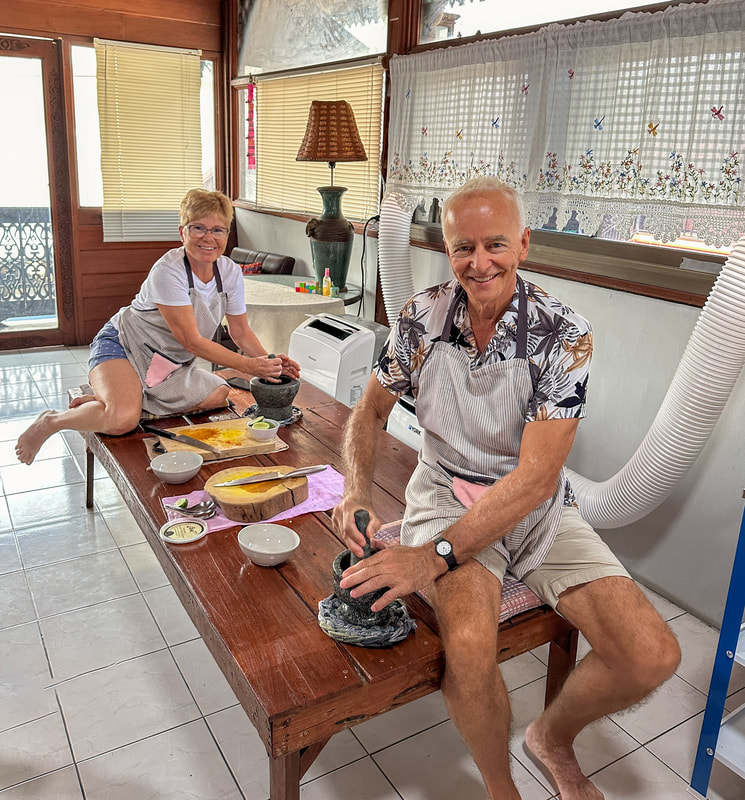
The experience was unique in its prep setup and that it took place in the chef’s home kitchen. There was a relaxed, eating at the family table, atmosphere with only one other couple in the class. Fun fact: the young couple was from Luxembourg. We were surprised the tiny country of 650,000 had its own language - Luxembourgish (and it’s considered endangered).
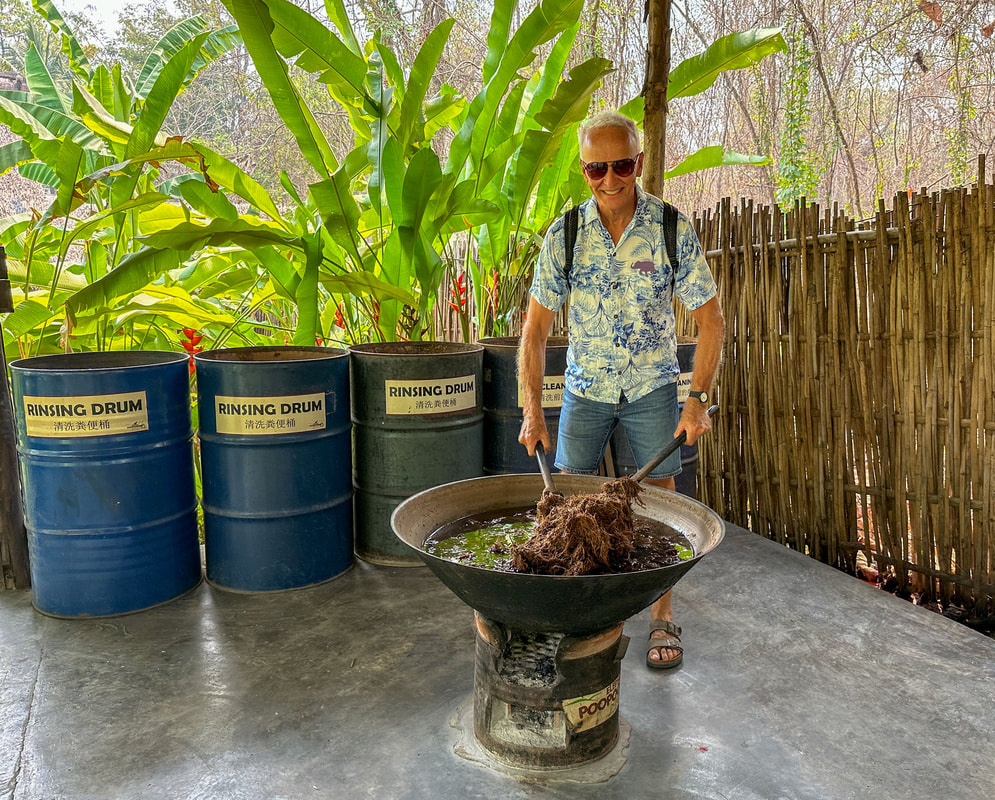
An enthusiastic employee with the Elephant Poopoo Paper farm walked us through its namesake process. There were a couple of kids with the group and they made the tour fun as they were coaxed into touching the poop at various stages. Dung collected from the several elephant sanctuaries around town is first sun dried to reduce it to featherweight and then it’s boiled to a pulp.
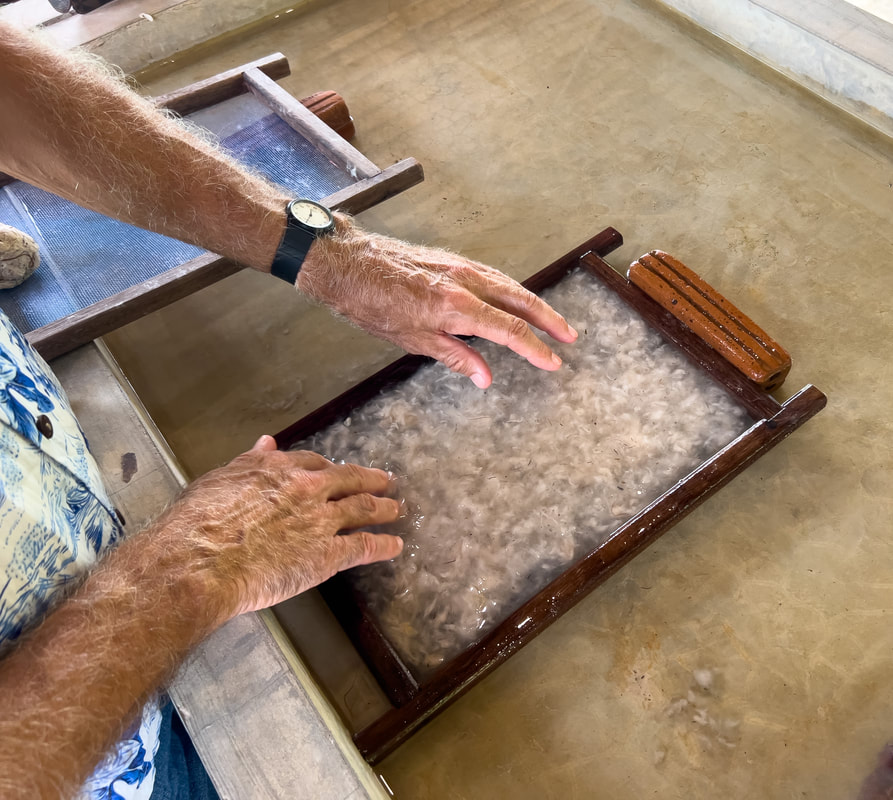
Additional fibre from coconut or banana leaves, along with recycled poo paper and mulberry fibre was added to water (and for some paper there's also food safe colouring). A good spin in a machine further separated the fibre to more easily clump together in balls. Above: Each of us placed our ball on our own screen and lightly submerged it. Finger tapping it just enough coaxed the fibres to come apart so that it evenly spread across the screen. From there it was sun dried and ready to use.
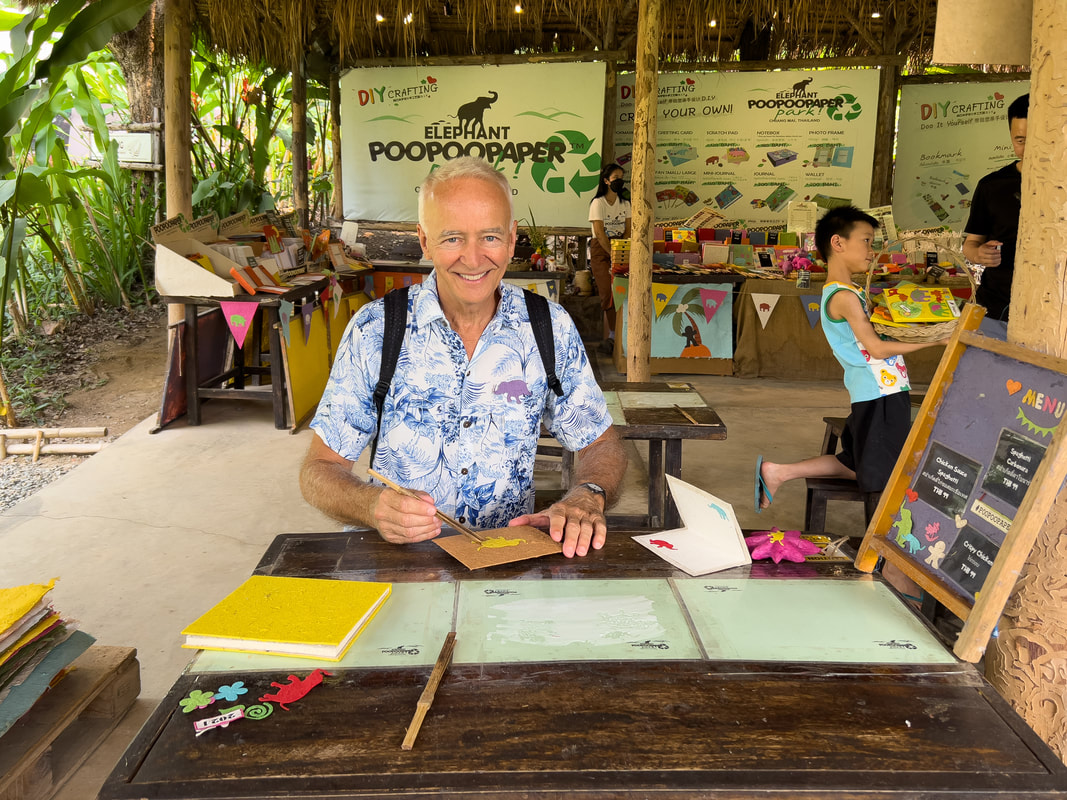
For those interested, there was a craft area filled with raw materials to make your own product. Rick got right to it while I agonized over every piece. It got to the point of comedy - everyone else had finished their masterpieces, a second group of DIY’ers had come and gone and I was still there. And then we got to the gift shop where I realized that I had made my creations upside down LOL.
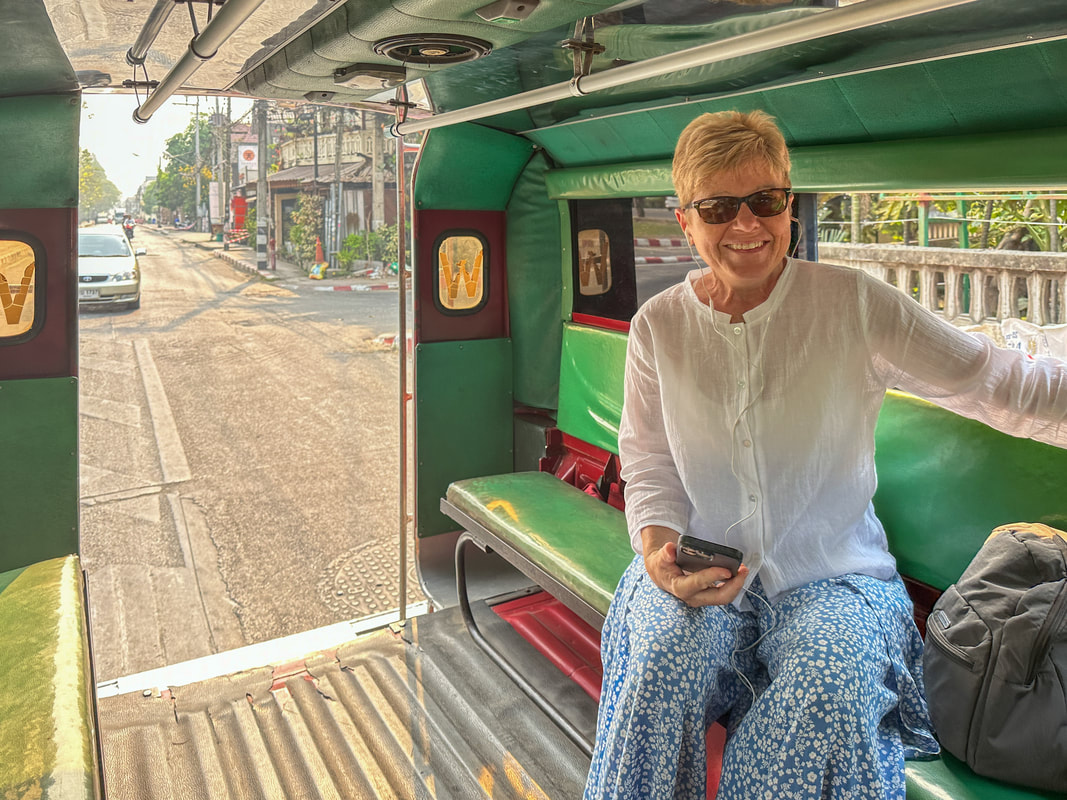
Red trucks, with a seating area on the flatbed, roved the streets, available for short trips for a few coins to all-day charters. We hired one for the day to take us into the mountains for a windy, scenic ride to the farmland and cooler temperatures in the small community of Mae Rim. The guide book warned that the road was very twisty so ensure that you have a good driver. When the truck didn't have a back door we were a little concerned, but it turned out to be an easy ride.
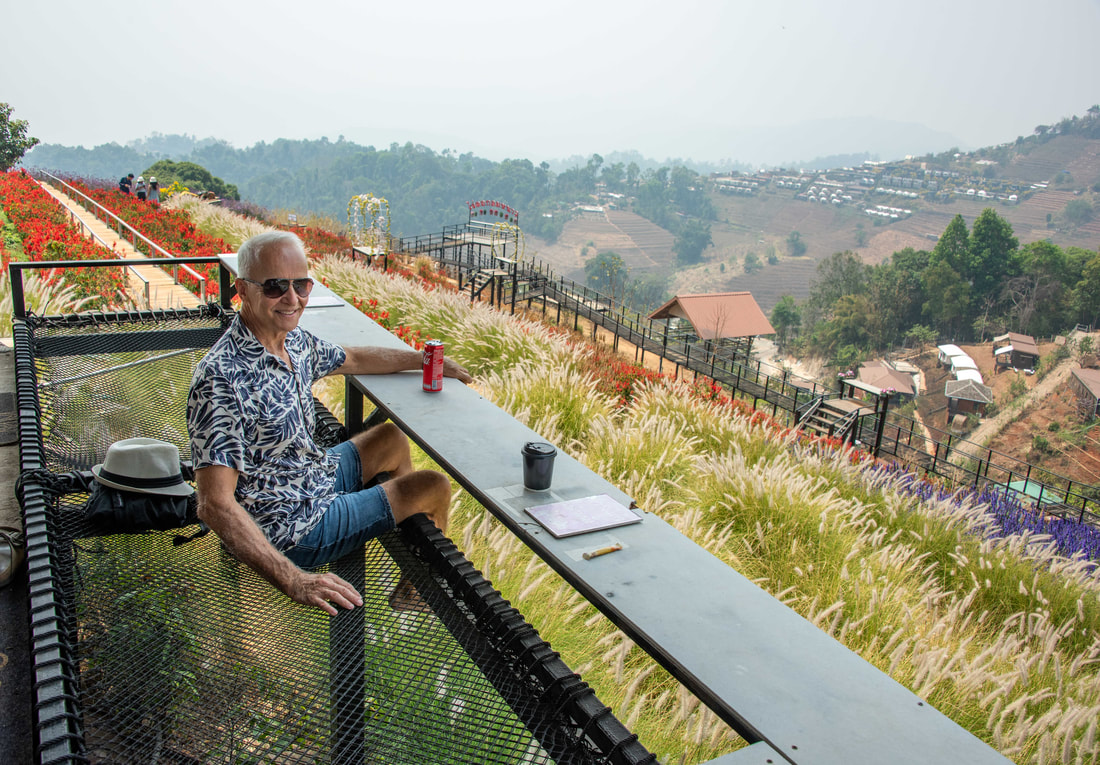
In the growing season it’s a series of vibrant green rice paddies terraced on the hillsides. But hanging over this section of gardens was consolation.
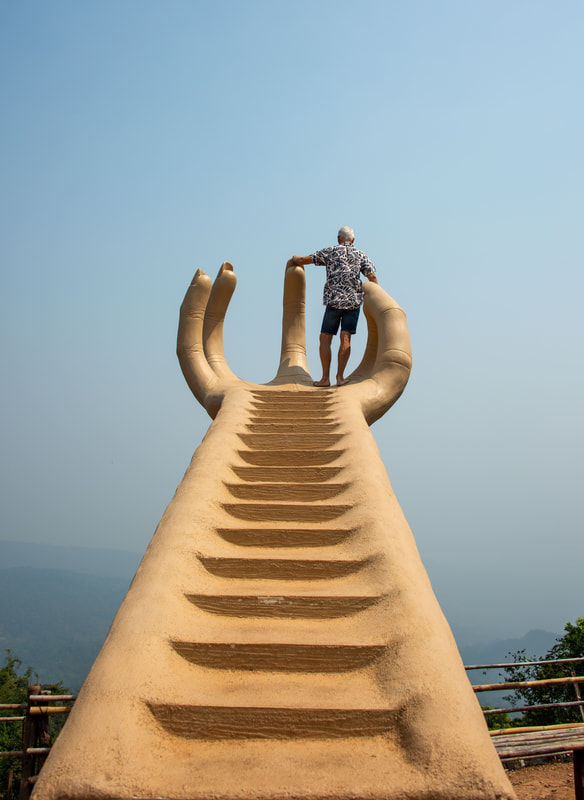
We’ve repeatedly seen signs that categorize us as elderly. One tour we were considering wasn’t going to allow the elderly, so we were set to lie about our age. There was a warning that the elderly shouldn’t climb this hand because there wasn’t anything to hold onto and after the fence the land sloped down for terraced rice paddy fields. Geesh, what does this mean for future trips.
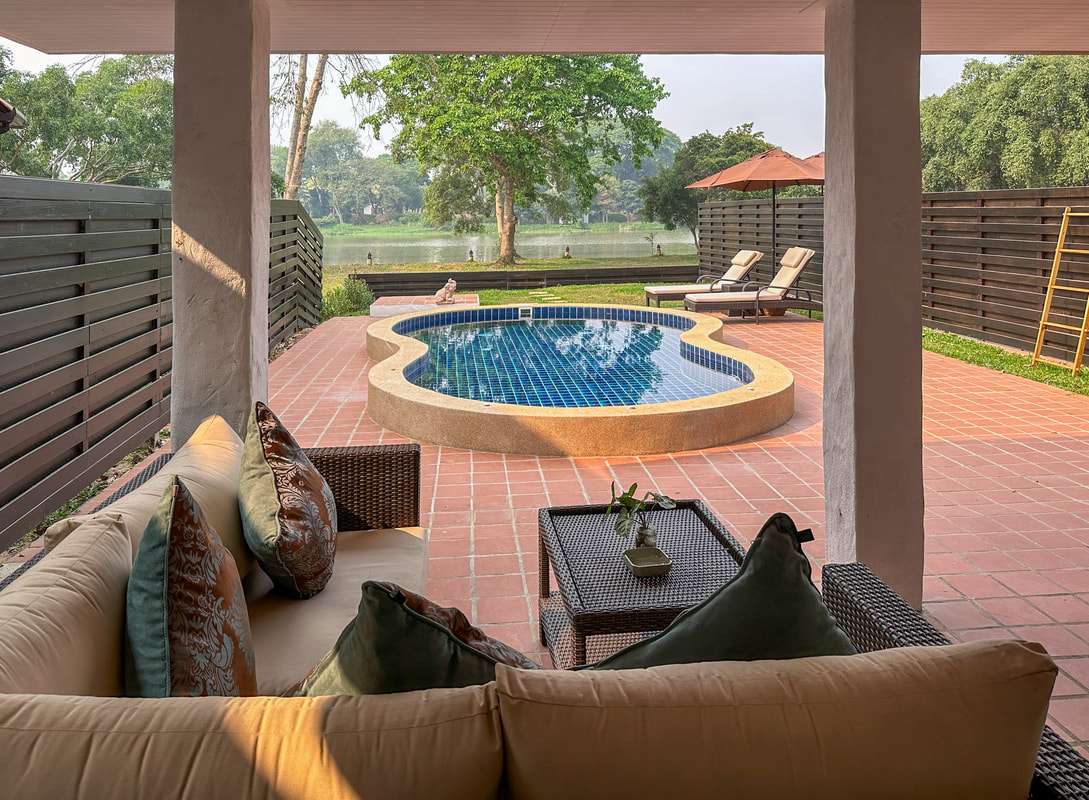
Another Rick score with a Booking.com huge discount. Our personal pool was perfect for cooling down our core after day trips in this town that was even hotter than Bangkok. (Chiang Rai, Mar 19-21)
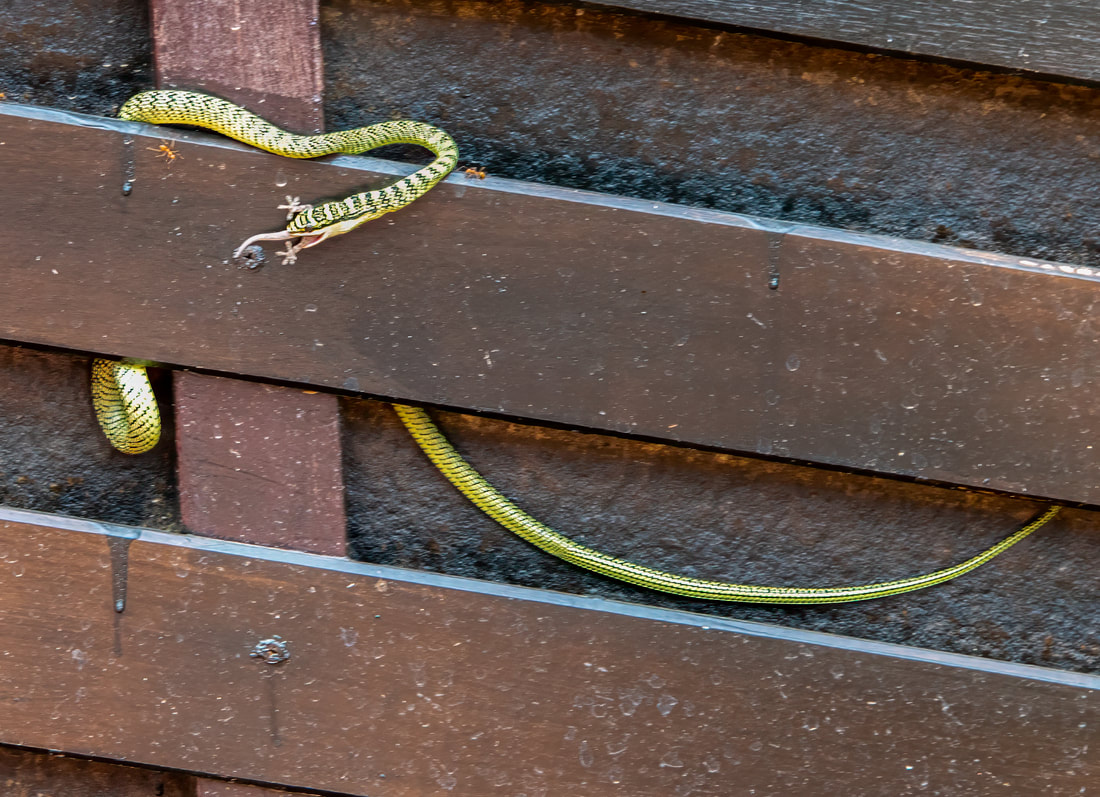
The one day we took to relax was an opportunity to see and hear the creatures around us. Throughout the day the extra loud type of cicadas sounded their mating call en masse for a few minutes and then quieted before starting up again later. An owl favoured a nearby tree, and this snake appeared on our fence. Poor little gecko. (The 'just caught' shot was too macbre to include)
Each mealtime this retired music teacher played an Indonesian bamboo angklung - it put you in the mood for heading out for the day or winding down in the evening.
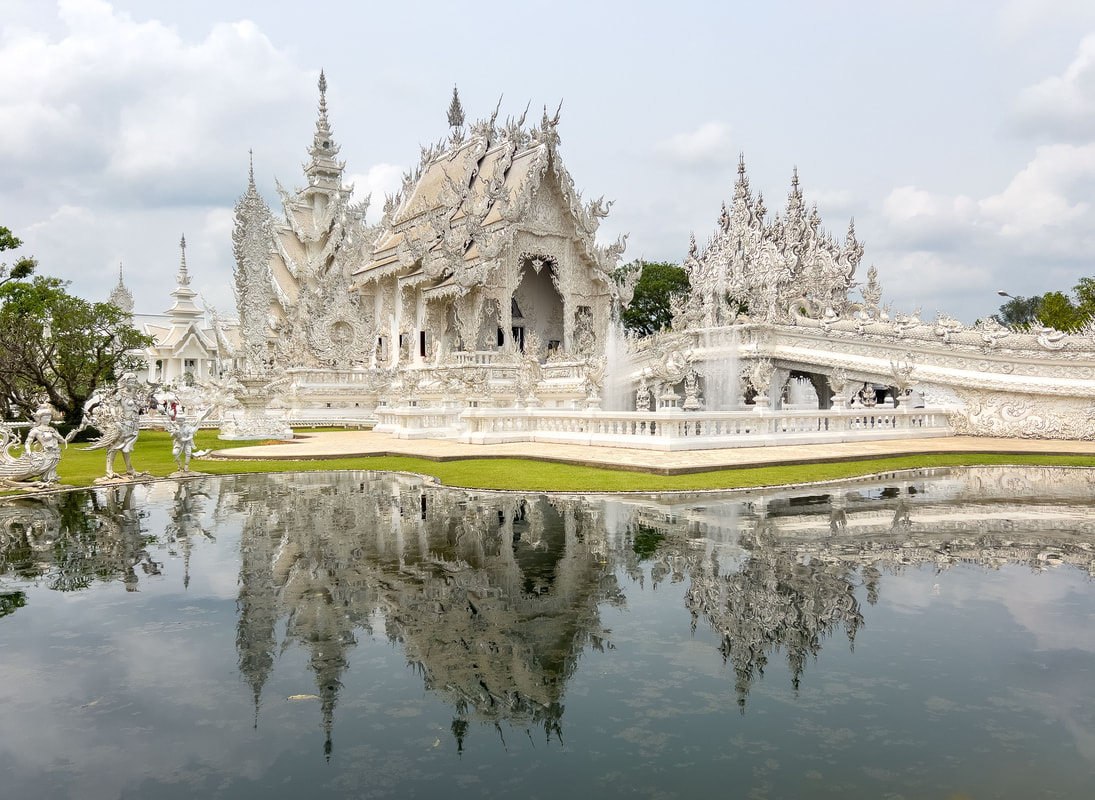
Whitewash and transparent glass chips give the Wat Rong Khun (aka White Temple) a dazzling, fairy tale appearance. Built in 1997, to replace the original wat that had fallen into disrepair, it has singlehandedly increased the tourist numbers to Chiang Rai.
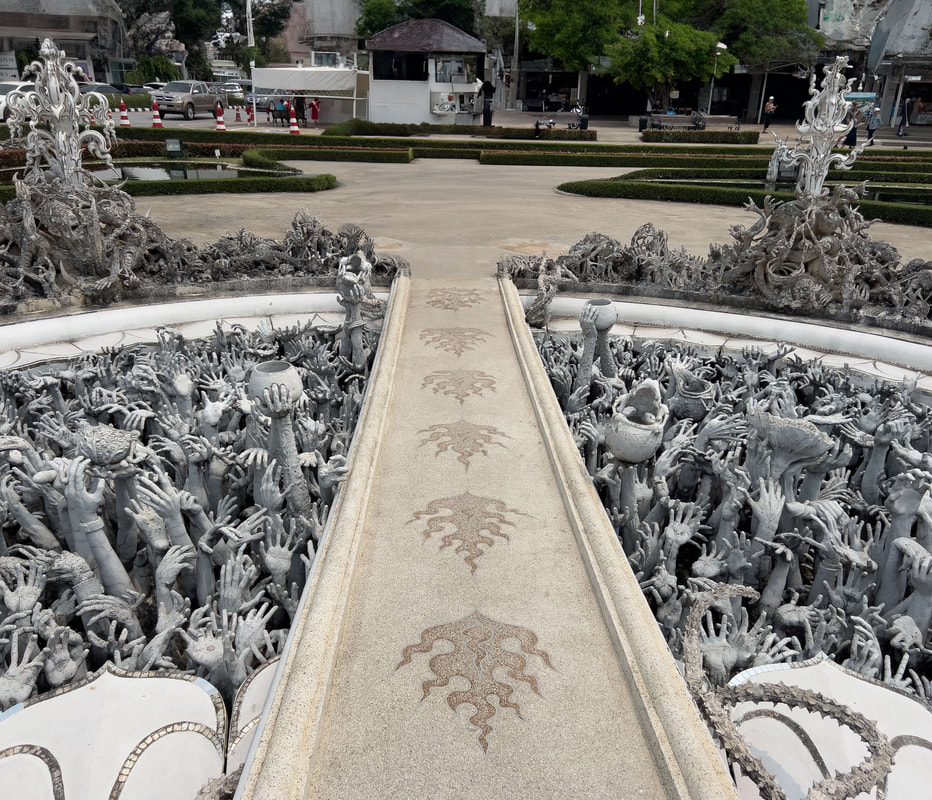
At the start of the long bridge to enter the temple are hundreds of hands reaching up which symbolize unrestrained desire. The bridge claims that the way to happiness is by foregoing temptation, greed, and desire. Inside, wall murals feature evil faces beside Western idols (ie The Terminator, Freddy Krueger) and catastrophic world events (ie Twin Towers bombing) to reinforce the notion that humans are wicked. Then incongruously, images like Hello Kitty and Superman were added to confuse the messaging.
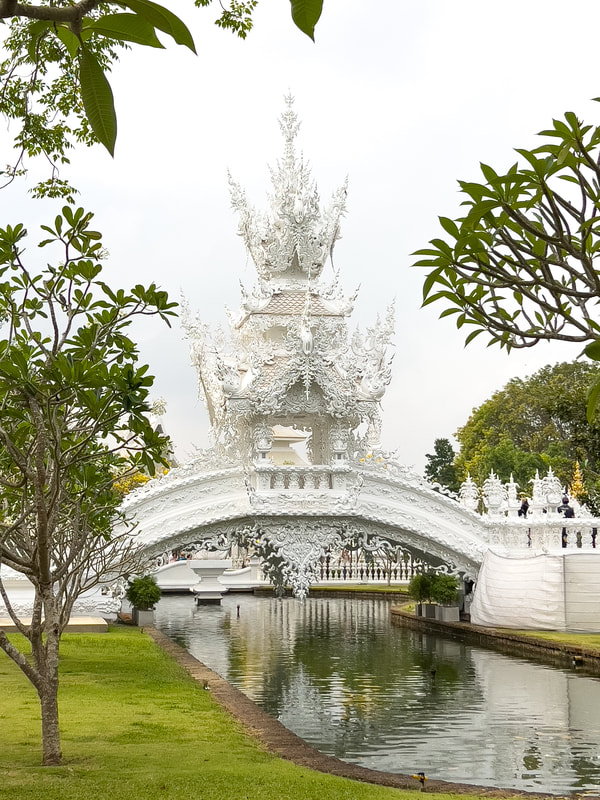
In an ironic twist, the designer built the structures as a gift to Buddha with the hope that it will buy him immortality.
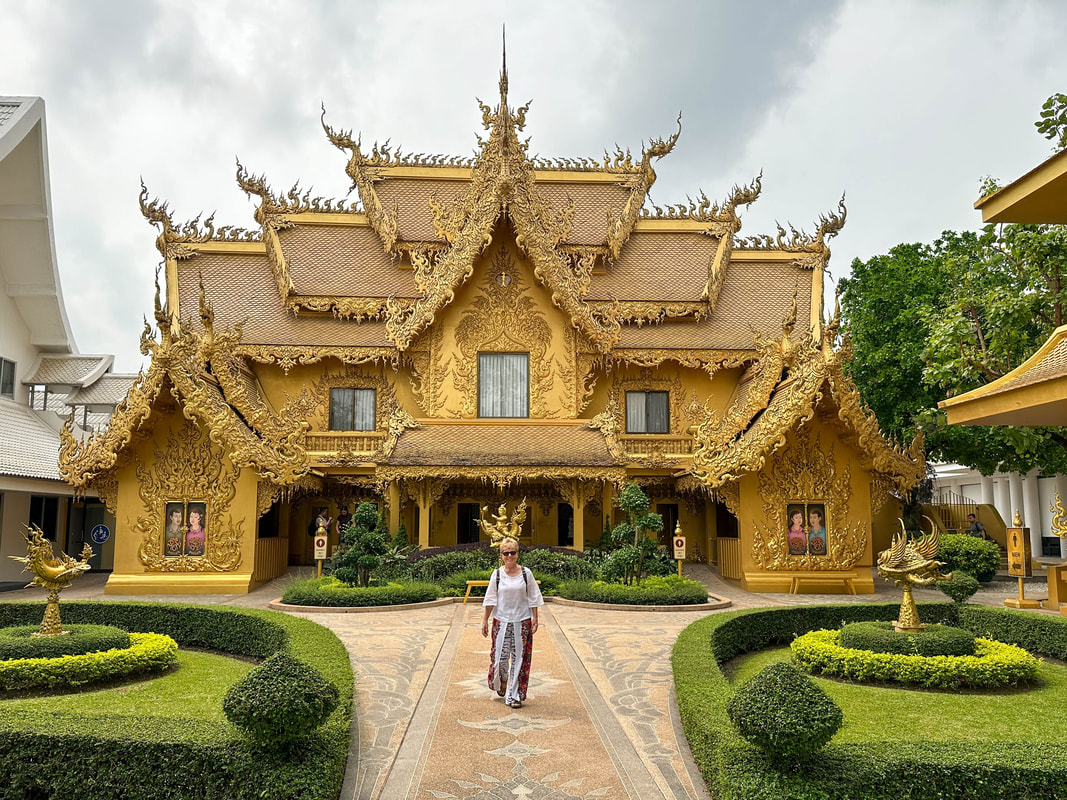
Not to be outdone by the White Temple, the Golden Toilet on the same property held its own.
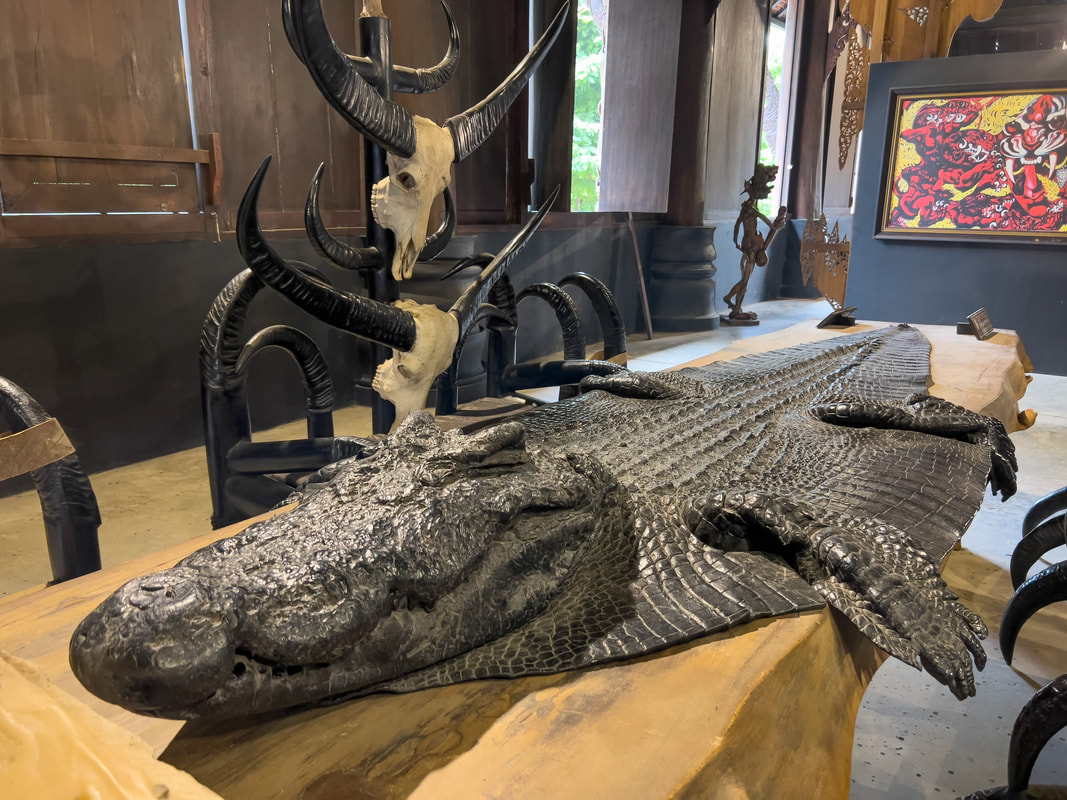
In the triad of visits for the day, next up was the Black House – part museum and part working studio. Thawan Duchanee, an artist and collector of all things cringeworthy, has been adding to this museum over the past 40 years. Aside from the large number of crocodile skins and items of furniture made with horns being disturbing, it was a peaceful, shady property to explore.
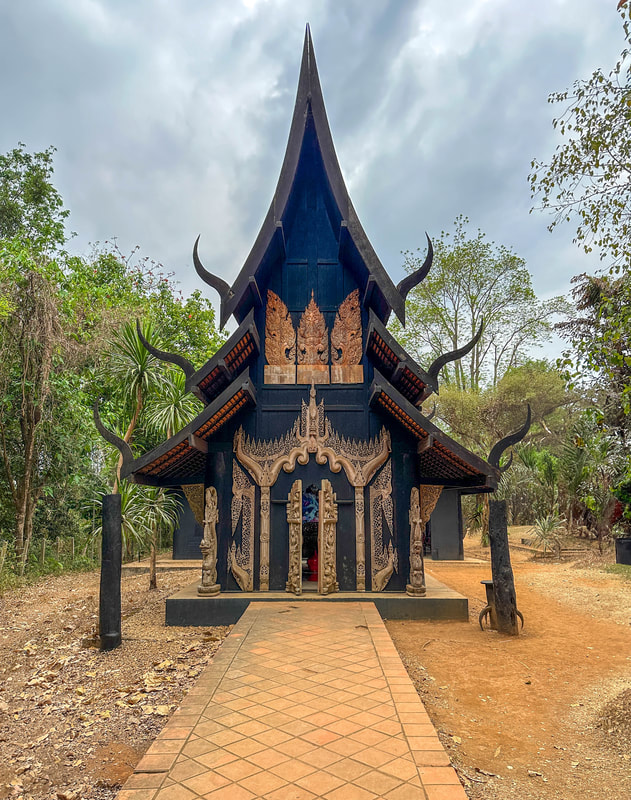
Forty buildings with a variety of architectural styles dotted the property, each housing Thawan’s collection and work by some of the country’s noted artists. All had the overriding intention of dissuading visitors from desire, greed and suffering and leading them more toward enlightenment.
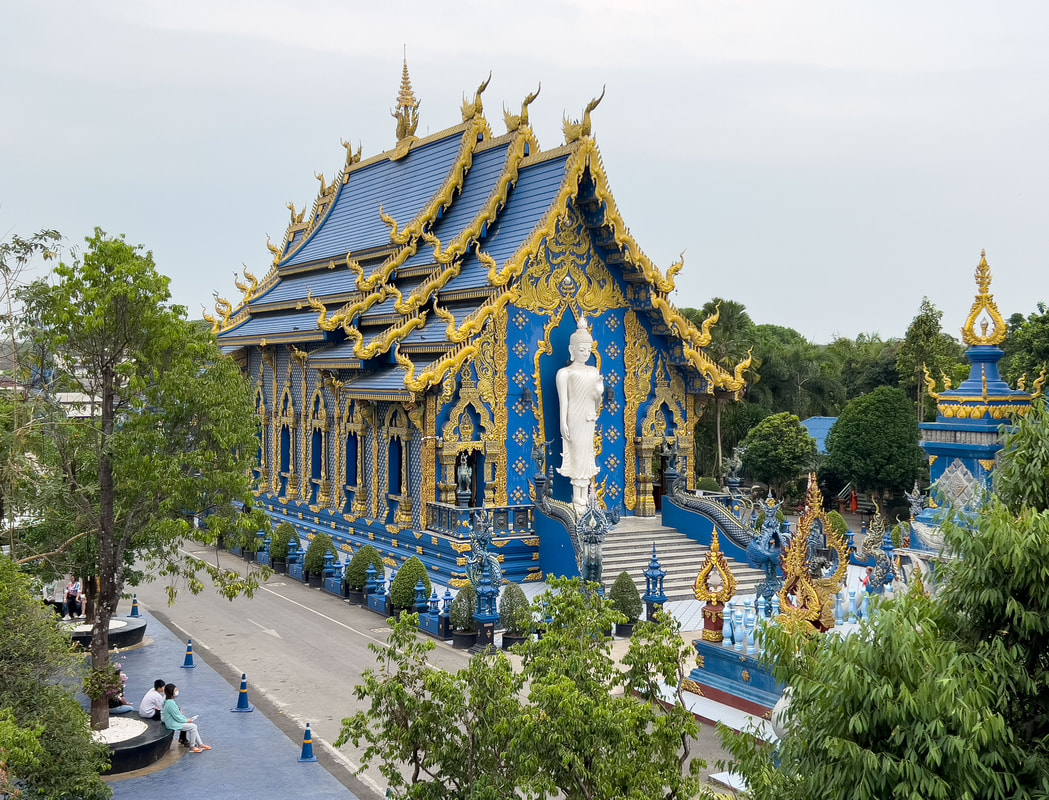
Influenced by his work with the White Temple, a local artist designed the Blue Temple (Wat Rong Suea Ten) to replace the dilapidated wat previously here.
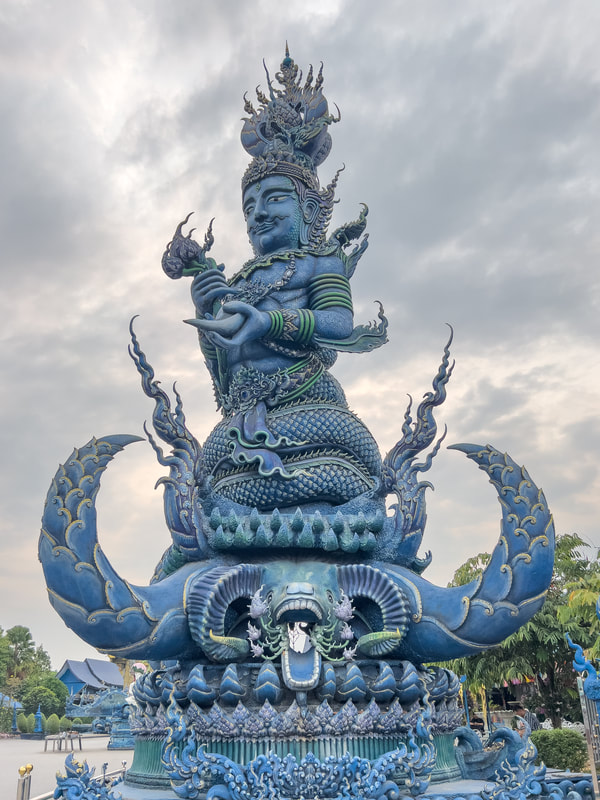
Its modern artistic design included psychedelic imagery and elaborate sculptures. The sky played along perfectly that day.
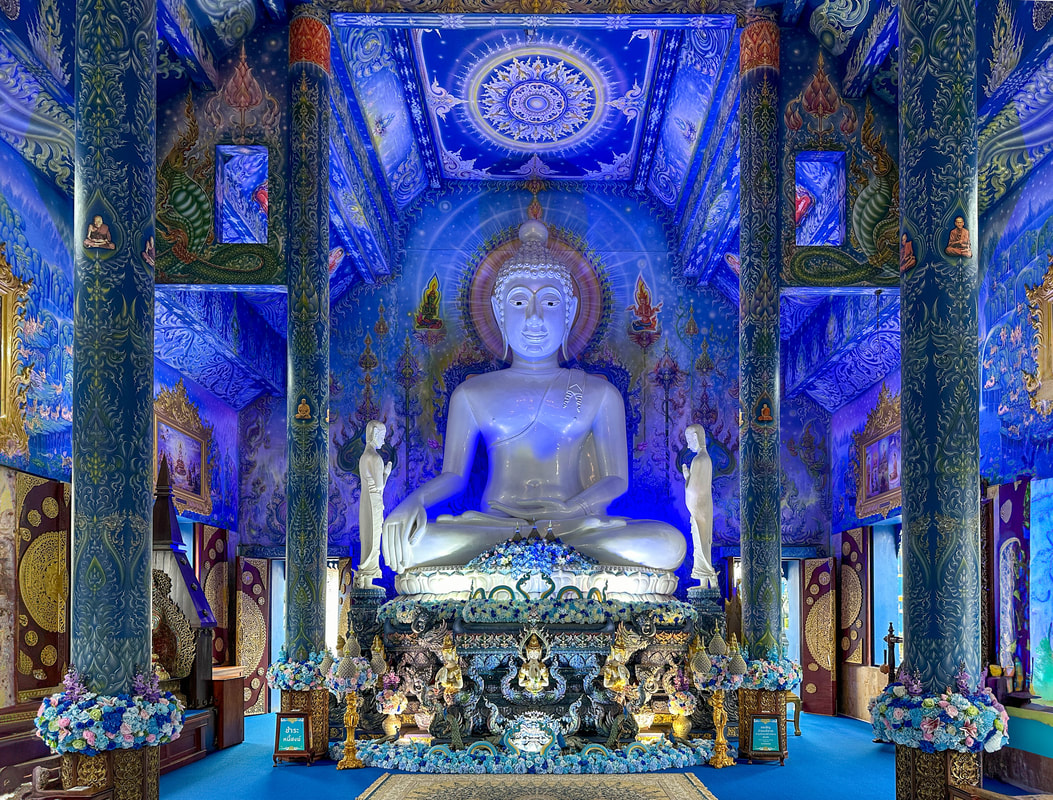
The overall effect draws many visitors who pay an entrance fee (common at almost all temples we saw, the popular and lesser known) separate from the flowers, cash, etc that the faithful leave.
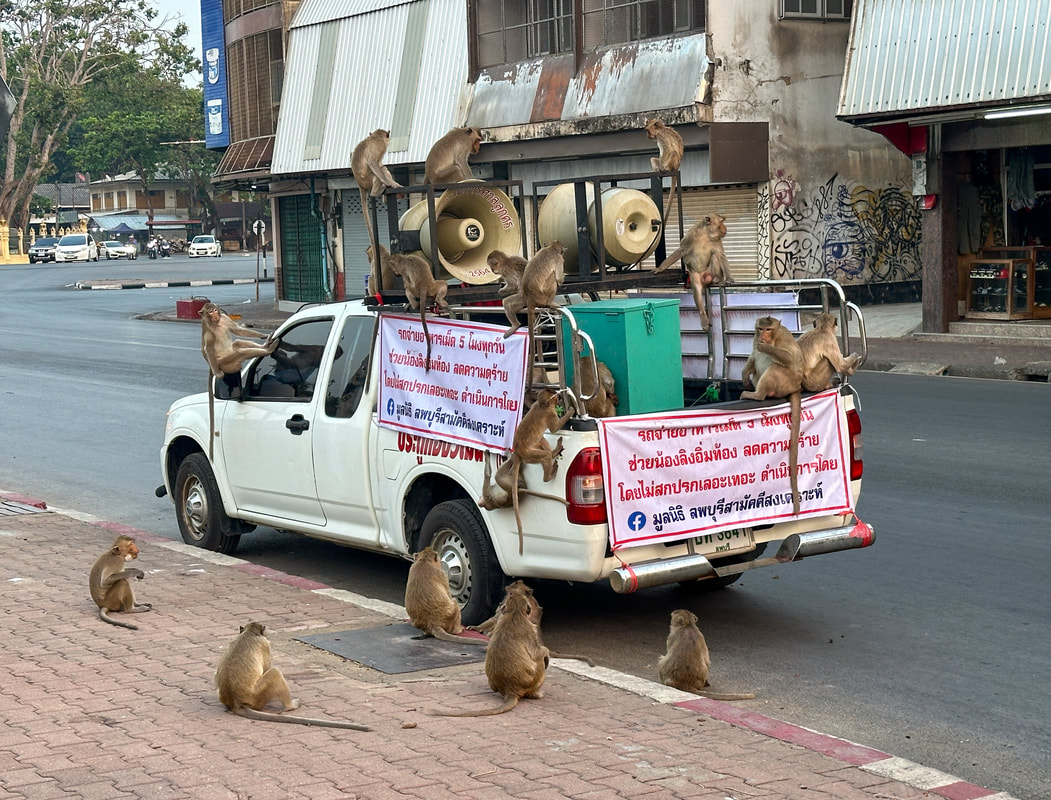
It’s man vs monkey in this town and the monkeys are winning. A portion of the townspeople continue a centuries held belief that monkeys are living representations of the Hindu god Hanuman and feeding and protecting them is ok. In contrast, there are those who see them as pests breaking into homes and businesses, destroying property and gardens. The locals can’t even collect rainwater because of the feces. There is now a sterilization program in place to control but not eradicate the population. (Lopburi, Mar 22-23)
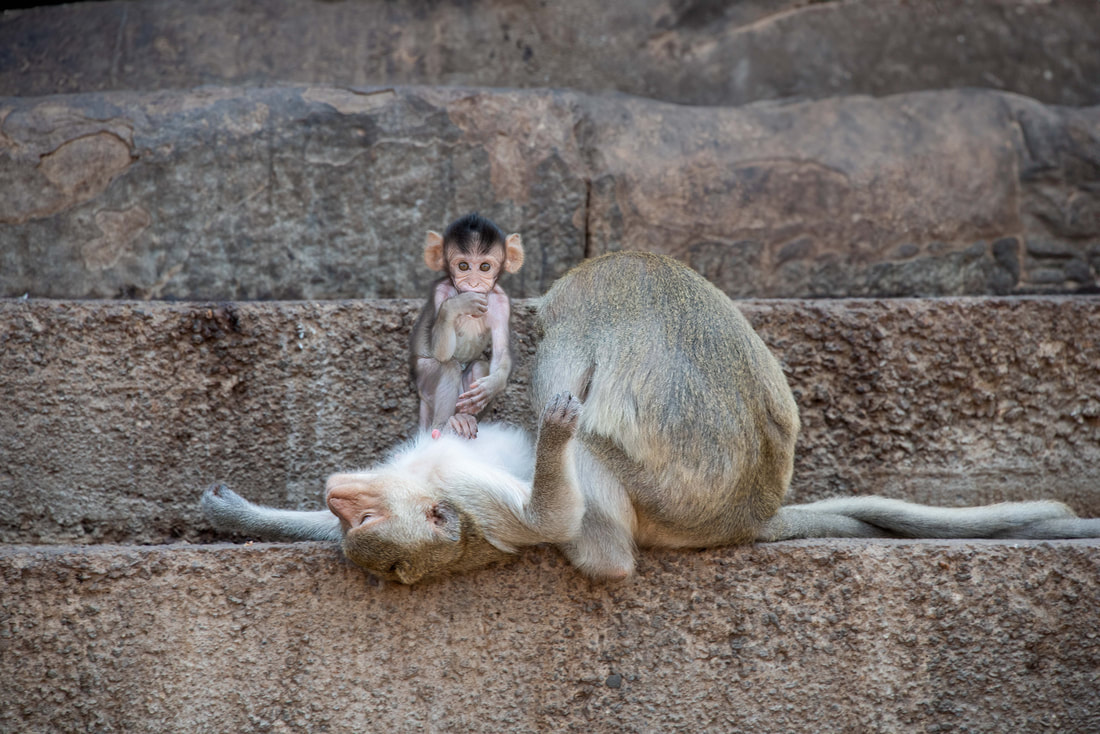
There was an outsized number of babies. Stolen sugary drinks and junk food have revved up their metabolism such that they now breed twice a year rather than the typical once.
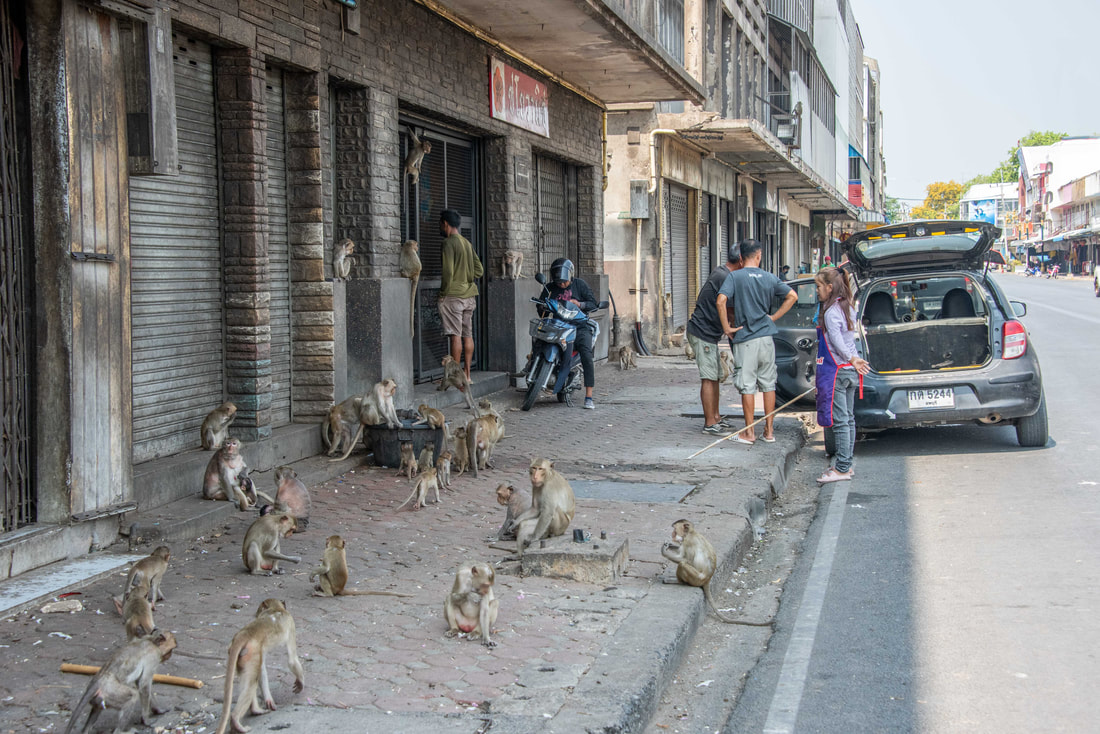
In the 13th century a shrine was built here amidst a heavily forested area. A troop of monkeys moved in and later a town slowly built up and the macaques stayed on and proliferated. In the town alone there are now 4,500 across 3 large competing troops and the forest option is still close by. Townspeople carry poles or brooms to shoo the little menaces away from mischief.
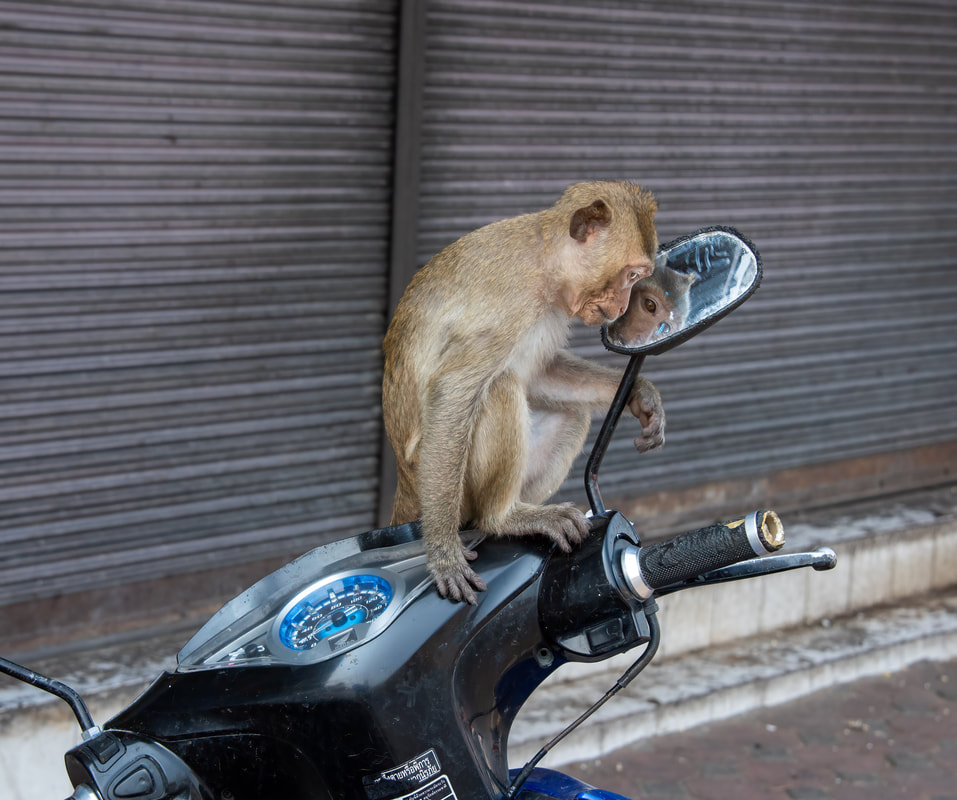
This one and a friend were ripping up the motorcycle seat when Rick approached, and now he's using the mirror to keep an eye on Rick. Later we saw a monkey rip away a piece of door trim. The driver returned with a broom.
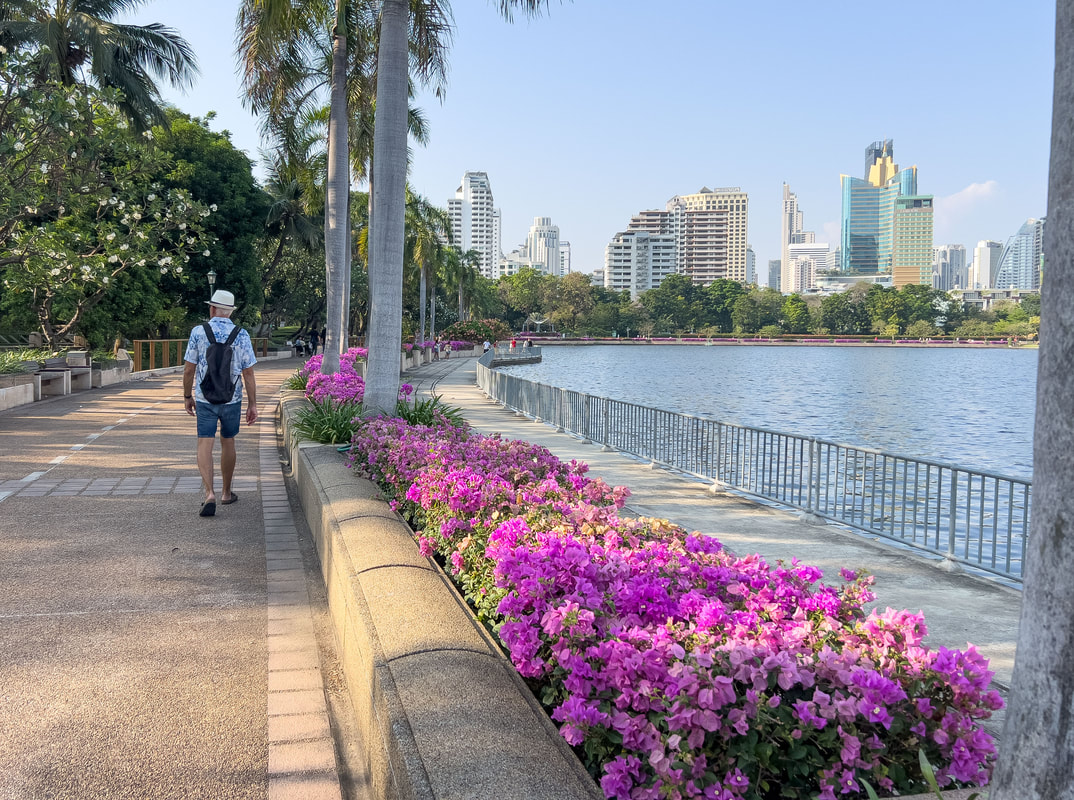
It was back to Bangkok for 3 chill days before our flights home. For a long time the city’s answer to its own Central Park was the Lumphini Park. But since our 2021 guidebook, the nearby Benjakitti Park has been increasingly developed to what is now a world class destination for a plethora of options for indoor and outdoor sports along with paths for bikers, walkers and joggers. The choicest area being the one that circles a large lake. Completely fringed with bonsaied bougainvillea, it offered pedal boats and kayaks, a stage (where a rock band played the night we visited) and a massive convention center at one end. And the best part is that the 2 parks are connected by a skybridge.
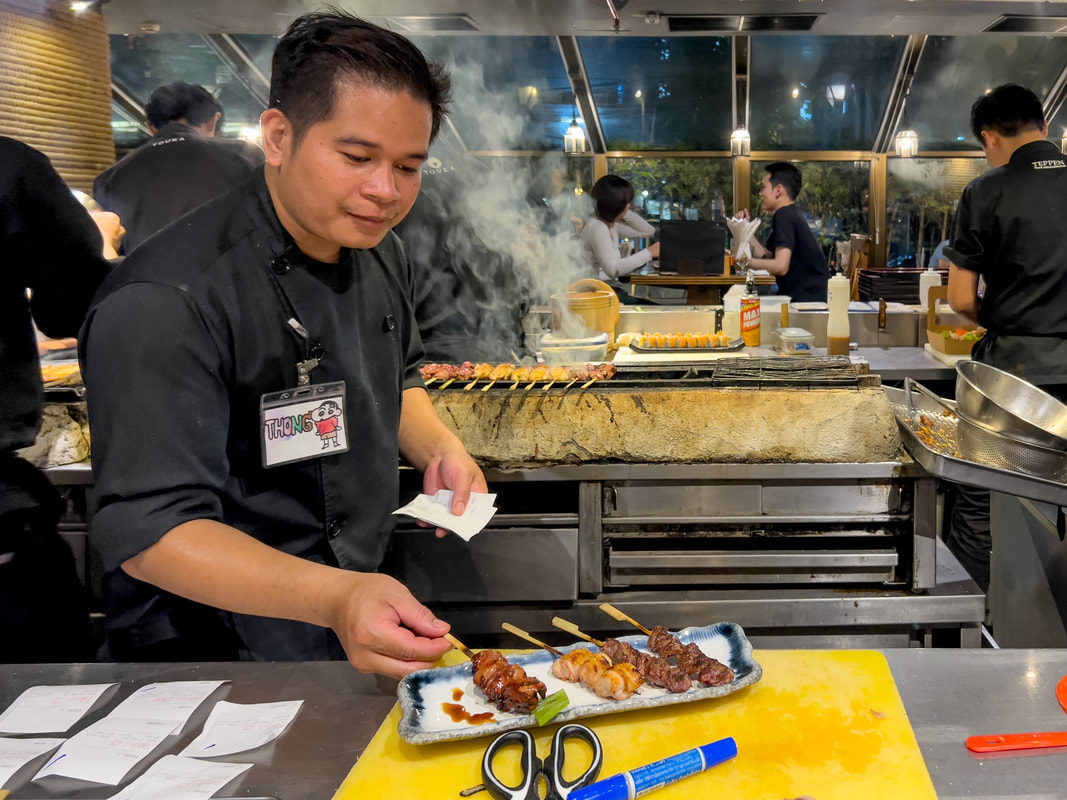
We’ve been told that Thai people like to see their meals being made even if that means the food is cooked along the sidewalk as a first inspection and then served inside the restaurant. At this Japanese yakitori restaurant, each set of guests was introduced and sent off after their meal with a cooks and servers hearty welcome and goodbye. Sitting ringside and watching the cooks was like theatre. It was such an energetic, fun night!
On the last day we finally both got long massages, a Thai specialty. As a time to reflect on our experience, it has repeatedly struck us how clean the landscape and streets are especially given the number of locals and travelers who walk the sidewalks and beside the waterways every day. In Chiang Mai one morning we saw a worker cleaning leaves (& the occasional bit of litter) out of a long canal with a pool net. And during an evening strolling a market a loudspeaker message reminded people to keep the streets clean and use garbage bins.
And then there were the people who were welcoming and soooo polite as is their culture, especially when it comes to respecting their elders. At one restaurant, a server we got to know left us his & her small elephant figures with our hotel front desk.
And then there were the people who were welcoming and soooo polite as is their culture, especially when it comes to respecting their elders. At one restaurant, a server we got to know left us his & her small elephant figures with our hotel front desk.